US Strikes Sink Iran's Shahid Bagheri Carrier in Operation Epic Fury
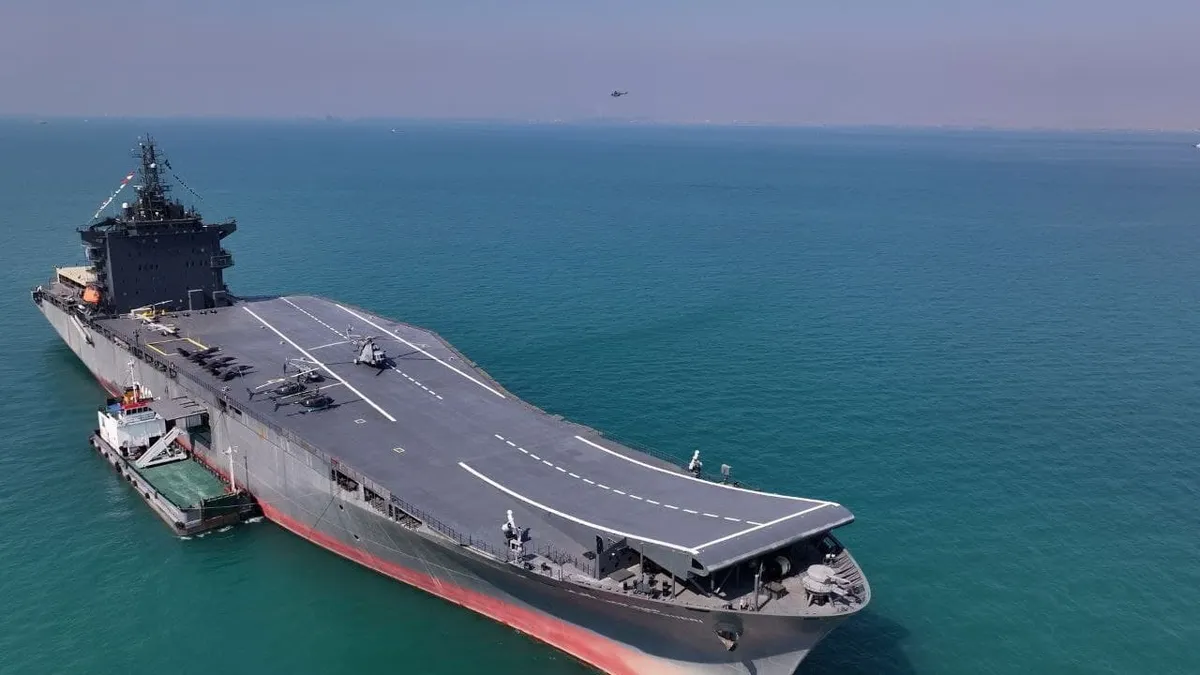
The destruction of Iran's air-capable platform forces Iranian naval doctrine toward missile-centric and asymmetric tactics (fast attack craft, subsurface mines, anti-ship missiles), which shifts U.S. Navy operational planning from air-defense layering toward mine countermeasures and maritime interdiction posture in the Strait of Hormuz.
This directly constrains U.S. carrier task force freedom of maneuver and increases demand for MCM vessels and unmanned mine-clearing systems, creating a procurement signal for companies like Huntington Ingalls (LCS variants) and emerging autonomous MCM platforms.
If confirmed, the loss of Iran's most advanced naval platform eliminates its only organic air-capable platform and signals a decisive shift in regional naval balance favoring U.S. and allied forces in the Persian Gulf and Gulf of Oman.
The Shahid Bagheri's destruction removes Iran's ability to project air power beyond coastal defense, forcing a reversion to land-based and missile-centric naval strategy.
However, the article provides no operational context (casualty counts, secondary damage, Iranian response posture, escalation risk) needed to assess whether this represents a contained tactical success or the opening phase of broader regional conflict.
The absence of detail on U.S. strike losses, damage to U.S. platforms, or Iranian retaliation capability creates material uncertainty about the true cost and durability of this advantage.
The article does not specify: (1) which other Iranian vessels were destroyed or damaged; (2) U.S. strike platform losses or damage; (3) whether strikes targeted shore-based air defenses, missile facilities, or only naval assets; (4) Iranian military response or threat posture following the strikes;...
Fault Lines
Strategic intelligence, synthesized daily — with a public track record. Every call graded against what actually happened.