Boeing Certifies LAM Pylon to Restore Six External Hardpoints on B-1B Fleet
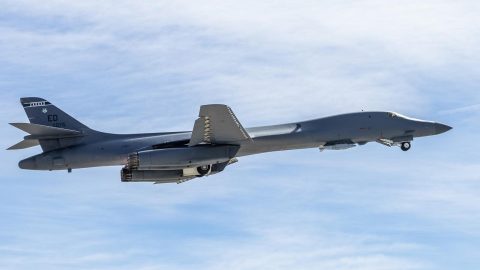
The B-1B fleet is the only manned platform in the USAF inventory with sufficient range and payload for sustained operations against distributed targets across the Indo-Pacific. Adding external carriage removes a hard constraint on sortie efficiency — fewer sorties per target set means lower logistics burden and reduced exposure time.
If the LAM pylon enables sustained hypersonic missile employment (AGM-183 ARRW or successor), the B-1B becomes a credible delivery platform for standoff strike against defended targets. The timing matters: USAF is simultaneously managing B-52 modernization (slower) and facing B-1B structural fatigue issues that limit flight hours.
Expanding external carriage may extend the B-1B's operational life by shifting load distribution and reducing internal stresses.
The B-1B fleet operates under internal carriage constraints that have shaped strike planning for three decades.
Restoring six external hardpoints directly increases sortie payload — the difference between a B-1B carrying 24 cruise missiles internally versus 30-36 externally — without requiring airframe redesign or new procurement. For USAF strike planning against China or Iran, this is a capacity multiplier in a fleet that cannot be expanded (production ended 1997).
The certification timeline and integration cost are critical: if this reaches operational status before 2028, it shifts the calculus for Taiwan contingency strike packages and Middle East sustained operations. Watch whether USAF commits to fleet-wide retrofit or limits it to forward-deployed squadrons.
What is the actual payload increase per sortie — the article doesn't specify how many hypersonic or standoff cruise missiles the six external hardpoints can carry, or what the weight/drag tradeoffs are. Is this a retrofit for all 61 operational B-1Bs, or a subset?
Fault Lines
Strategic intelligence, synthesized daily — with a public track record. Every call graded against what actually happened.