Ukrainian Drones Strike Russian Mi-28 Gunship 150km Inside Russia; Deep-Strike Capability Extends
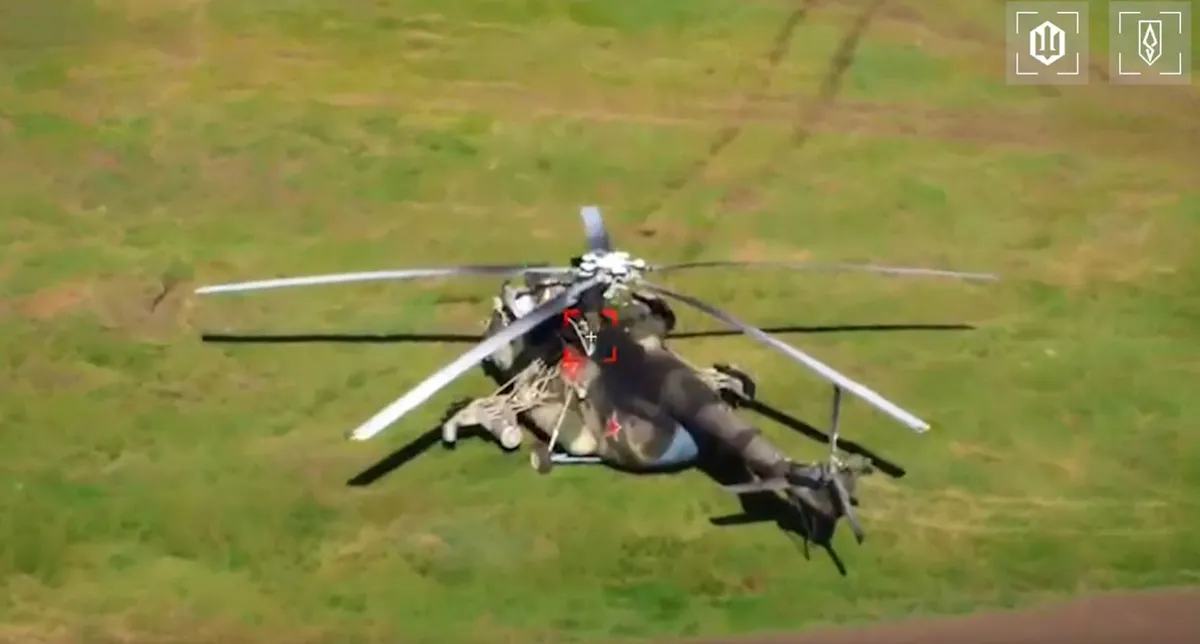
Ukraine's extension of strike range into Russian rear areas forces Russian logistics to disperse or relocate, increasing fuel and ammunition transport costs and delivery times to the front. This directly degrades the tempo of Russian ground operations — longer supply lines mean slower offensive cycles.
Simultaneously, rotorcraft losses reduce Russian close air support availability, compounding the effect on ground force effectiveness.
This is the fourth confirmed Ukrainian strike on Russian rear-area infrastructure in 72 hours — Orsk refinery, Perm industrial facility, and now deep-strike rotorcraft kills.
The pattern signals Ukraine is systematizing long-range drone operations against logistics nodes, not just one-off strikes. Losing two rotorcraft at a single location indicates either degraded Russian air defense discipline or Ukrainian ability to penetrate it.
For procurement: this justifies continued DoD funding for Ukrainian drone supply lines and signals that attrition of Russian aviation assets is now occurring in the rear, not just at the front. Watch whether Russian air operations shift to shorter-range basing or reduced sortie rates — either outcome degrades their ability to support ground operations.
Did Russian air defense systems fail to detect the drones, or were they absent from the airstrip entirely? The answer determines whether Ukraine has cracked Russian electronic warfare or simply exploited a logistics gap.
Fault Lines
Strategic intelligence, synthesized daily — with a public track record. Every call graded against what actually happened.