Cyber Partisans, Silent Crow Claim Rosstat Breach; Sensitive Data Allegedly Stolen
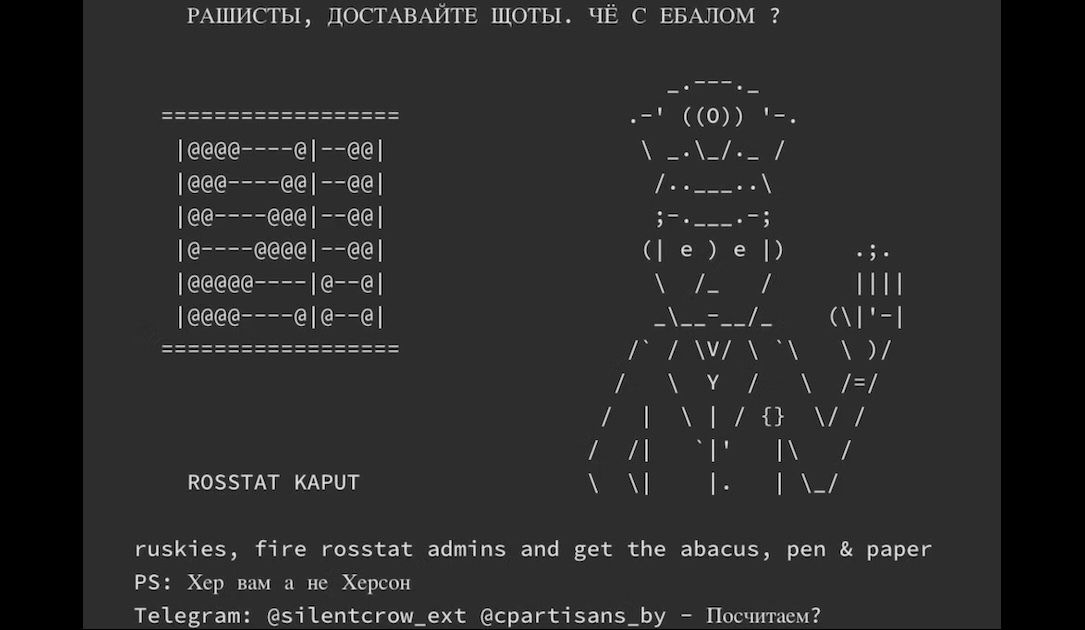
The timing locks this into the active-conflict operational cycle, not a standalone cyber event. Ukraine has resumed refinery strikes, intercepted 86% of a 433-drone barrage, and exploited a humanitarian pause to gather tactical intelligence—the Rosstat breach fits the pattern of simultaneous pressure across kinetic and cyber domains.
If casualty data was stolen, it becomes a secondary-source weapon: Ukraine can publish figures independent of Russian claims, complicating Moscow's ability to suppress domestic casualty awareness.
The demographic and census records from occupied territories carry strategic weight for post-conflict restitution claims and sanctions enforcement; their release would undermine Russian administrative legitimacy in those zones.
Moscow's official statistics apparatus—the single authoritative source for Russian demographic, economic, and casualty data—is now contested terrain.
If the hackers' claims of military casualty access are accurate, Ukraine and Belarus have direct visibility into a data stream Russia uses to manage wartime narrative control; if Rosstat's denial holds, Moscow retains that monopoly but credibility takes a hit either way.
The alleged theft of mortality records and occupied-territory statistics matters because those datasets feed sanctions targeting, war-crimes documentation, and demographic claims over annexed regions—whoever controls their release controls the first public accounting.
Watch whether the Cyber Partisans release samples in the coming days; verification will determine whether this is operational intelligence theft or psychological operation.
Did the hackers actually exfiltrate military casualty data, or are they claiming access they don't possess? Rosstat's denial is categorical but unverifiable without independent forensics.
Fault Lines
Strategic intelligence, synthesized daily — with a public track record. Every call graded against what actually happened.