Army Accelerates 1000km Anti-Ship PrSM to HIMARS, Extending Maritime Strike Range
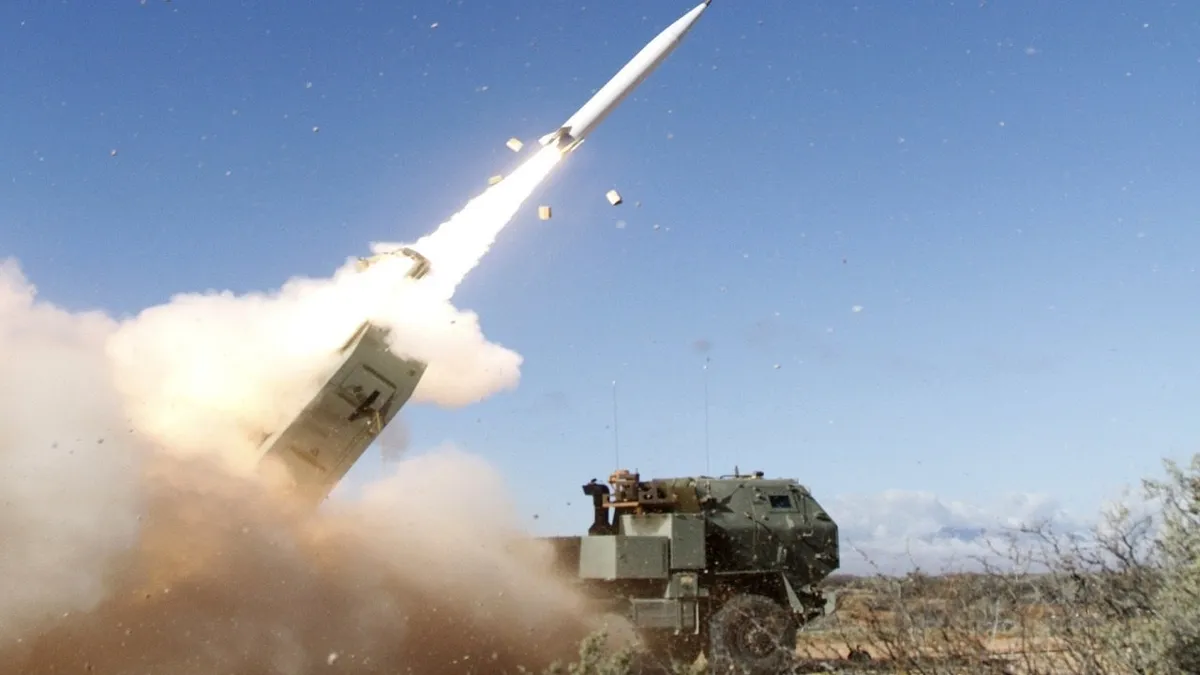
Army fielding of 1000km anti-ship strike forces a reallocation of deep-water denial responsibility away from carrier-centric models, which compresses Navy procurement timelines for competing maritime strike systems (LRASM, NSM) and potentially delays their production ramp if HIMARS-PrSM is resourced as the preferred low-cost alternative.
This also creates an interoperability burden: HIMARS targeting requires real-time naval fire control data, tightening operational dependence between Army and Navy command structures and exposing gaps in joint targeting infrastructure.
This move extends Army strike reach into Navy operational space, forcing doctrine and force-structure alignment between services.
If fielded before 2028, HIMARS-based anti-ship capability reduces dependence on carrier strike groups for deep-water denial in the Indo-Pacific — a significant shift in how the Army contributes to contested sea control.
However, the acceleration signal is only credible if the underlying Army notice specifies new funding, timeline acceleration, or priority elevation; the article provides none of these details, leaving the actual urgency unclear. Lockheed Martin (PrSM prime) and Raytheon (HIMARS integrator) benefit from expanded platform demand, but integration complexity and Navy-Army coordination risk are material unknowns.
The article does not cite the Army notice directly, does not specify the current or accelerated fielding date, does not quantify funding increase or timeline compression, and does not address whether Navy has been consulted on this capability or whether it affects existing maritime strike programs (...
Fault Lines
Strategic intelligence, synthesized daily — with a public track record. Every call graded against what actually happened.