State Department Reissues $10M Bounty on Iranian Cyber Operators After FBI Director Breach
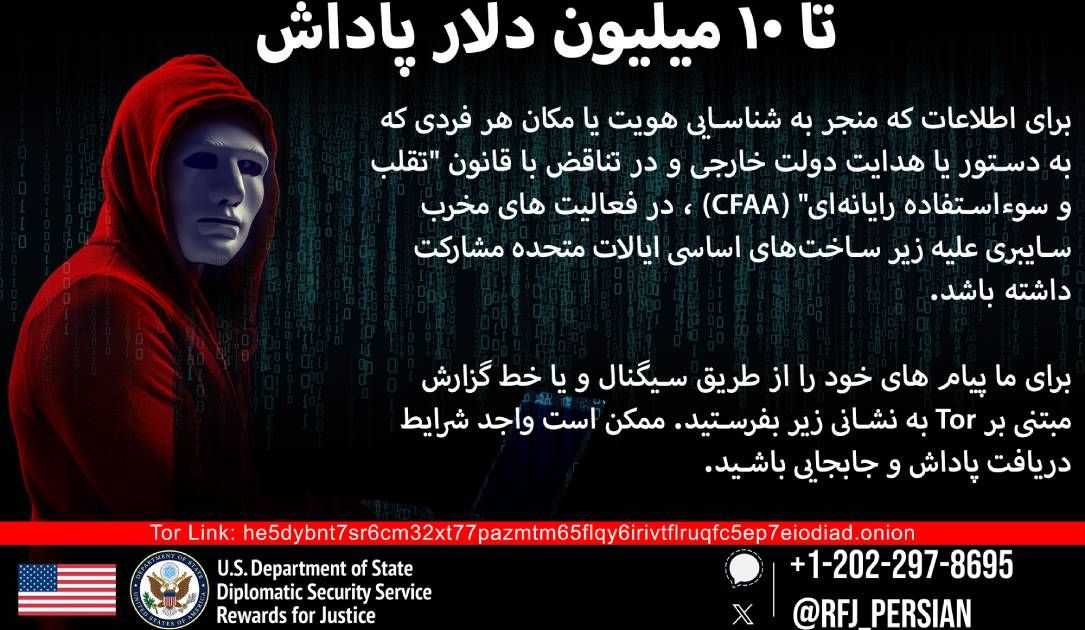
The breach of the FBI director's email during active US-Iran military operations (concurrent with 82nd Airborne deployment, B-52 strikes, and 23,000+ military personnel in theater per prior signals) exposes a gap between kinetic and cyber operational security.
Iranian cyber operators are now actively targeting US intelligence leadership in parallel with IRGC retaliation strikes — this dual-track approach (missiles + credential theft) forces US intelligence agencies to divert resources to damage control and email forensics while simultaneously conducting targeting operations against Iran.
The reward represents a tactical response to an intelligence compromise rather than a strategic shift in cyber deterrence.
The timing — reissuing a standing bounty immediately after a confirmed breach of the FBI director's account — signals acknowledgment that attribution and disruption of Iranian cyber operators remain difficult and that the US lacks sufficient intelligence to act unilaterally.
For defense contractors and intelligence services, this indicates that operational security protocols around senior leadership email accounts may be insufficient and that insider threat/credential compromise is now an active Iranian targeting vector during an active conflict.
The reward mechanism itself is weak: bounties on foreign state cyber operators have historically yielded minimal actionable intelligence, and Iranian operators working under IRGC direction are unlikely to be turned by financial incentive. This suggests the administration is using the reward as a public relations gesture rather than expecting operational results.
The article does not clarify whether this $10 million reward is a new allocation or a reissue of an existing bounty program, nor does it specify which Iranian cyber units or individuals are targeted, making it unclear whether this represents expanded scope or merely accelerated messaging.
Fault Lines
Strategic intelligence, synthesized daily — with a public track record. Every call graded against what actually happened.