Navy F-35C Completes First LRASM Integration Tests; Carrier Strike Group Anti-Ship Reach Expands
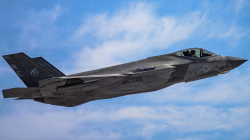
The LRASM-F-35C pairing directly addresses a weakness in current carrier doctrine: the F/A-18E/F Super Hornet's combat radius (roughly 500nm with fuel reserves) forces CSGs into range of modern integrated air defense systems (IADS) like China's Type 052D destroyers and HQ-9B systems.
LRASM extends that stand-off distance to 900+ nm, but only if the F-35C's sensor fusion and fire-control integration work in contested electromagnetic environments. If Lockheed and the Navy confirm successful testing under jamming and spoofing conditions (a detail not yet public), this becomes a 7-8 signal — a genuine asymmetric advantage against peer air defenses.
Watch whether the Navy requests accelerated LRASM production in the FY27 budget cycle to support multiple CSG rotations.
This closes a critical capability gap for INDOPACOM's carrier strike groups against distributed surface threats — particularly the PLAN's surface combatant fleet.
The F-35C can now deliver LRASM from beyond enemy air defense range, forcing the Chinese navy to operate under persistent stand-off threat that its current air defense architecture was not designed to counter.
The next inflection is full operational testing (FOT) and integration into carrier air wing loadout planning; if that timeline holds (expected 2027-2028), the Navy can begin embedding LRASM sorties into CSG deployment cycles by 2028-2029, fundamentally altering the calculus for any Taiwan Strait contingency.
What is the actual integration timeline from test completion to initial operational capability — does the Navy expect FOT to begin in 2027, and is there a programmed CSG deployment date for LRASM-capable F-35C squadrons?
Fault Lines
Strategic intelligence, synthesized daily — with a public track record. Every call graded against what actually happened.