RAF Chinook H-47(ER) Refueling Fit Extends Range, Raises Sustainment Cost Questions
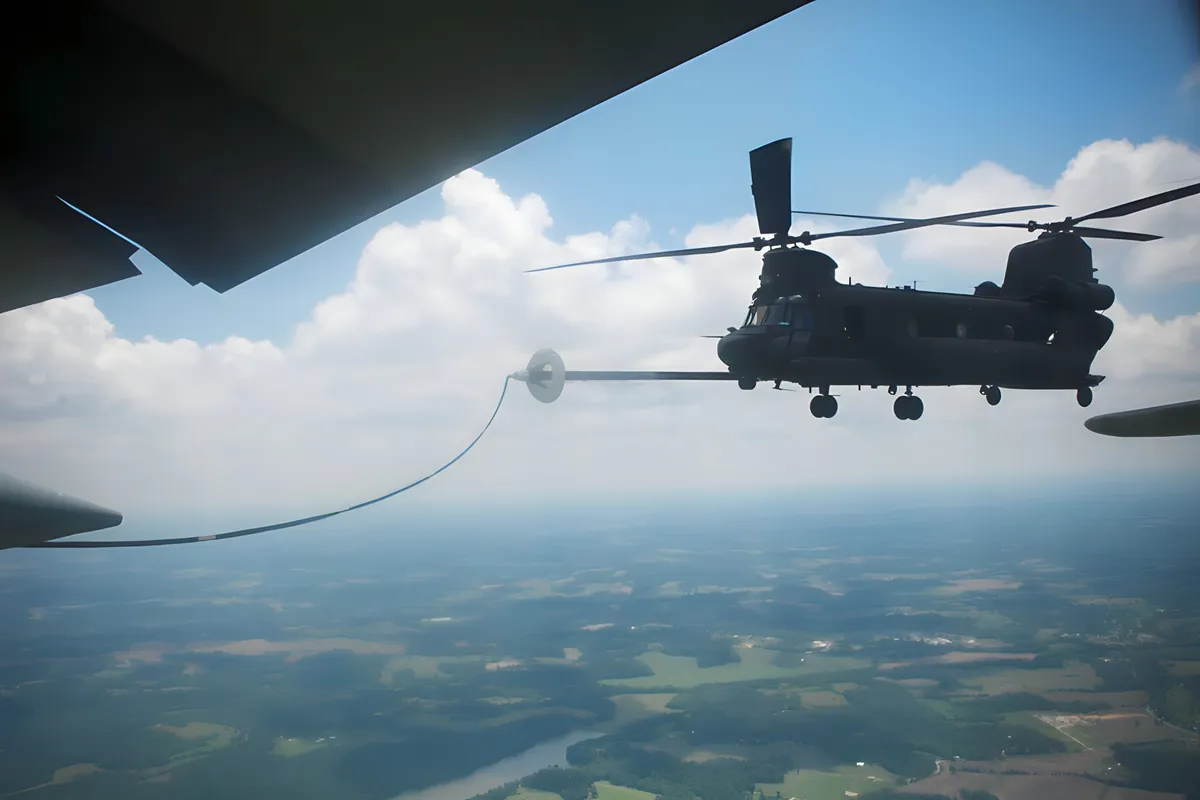
RAF Chinook refueling capability reduces dependence on forward landing zones and intermediate bases, lowering logistics footprint in contested regions—this directly improves force persistence in Indo-Pacific operations where allied basing is constrained and vulnerable.
The capability also increases interoperability with US Army CH-47s in joint operations, but only if UK tanker fleets (A330 MRTT) are certified and trained for helicopter refueling profiles—a certification gap the article does not address, and one that could limit actual operational utility if unresolved.
This extends Chinook operational range and endurance, directly improving power projection in expeditionary operations—particularly relevant for Indo-Pacific deployments where forward basing is limited.
However, the signal is incomplete: the article does not specify whether refueling pods are already integrated into the H-47(ER) design, who supplies the equipment (Boeing, Airbus, or a third party), whether retrofit costs are embedded in the existing Chinook contract, or whether UK tanker assets (A330 MRTT) have been certified for helicopter refueling.
Without these details, program managers cannot assess whether this is a design-phase integration (low additional cost) or a retrofit mandate (schedule and budget risk). The decision also does not clarify whether this capability applies to all incoming airframes or a subset—a material distinction for force structure planning.
The article does not specify: (1) which contractor supplies the refueling equipment; (2) whether integration is design-phase or retrofit; (3) total program cost impact; (4) certification status of UK air-to-air refueling assets for helicopter operations; (5) whether the capability applies to all H-4...
Fault Lines
Strategic intelligence, synthesized daily — with a public track record. Every call graded against what actually happened.