Air Force Extends B-1 and B-2 Service Life Through 2037; $1.7B Modernization Delays B-21 Ramp
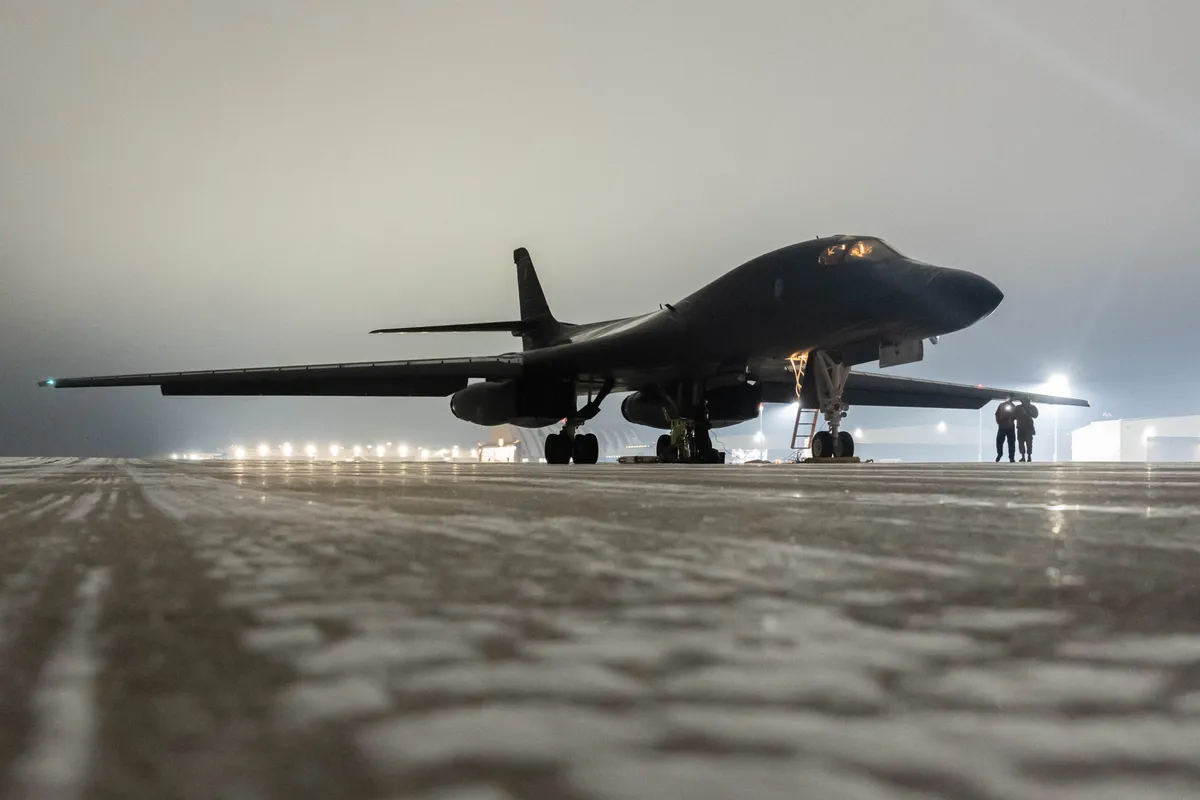
The decision to extend legacy bomber life consumes sustainment dollars that would otherwise flow to readiness for distributed operations in the Indo-Pacific.
With 1,300 Marines now positioned in the Philippines with anti-ship missiles and three carriers in the Middle East, the Air Force is absorbing opportunity cost: every dollar spent on B-1 depot maintenance is a dollar not spent on B-52H upgrades, standoff munitions, or forward-basing infrastructure in the first island chain.
If B-21 production slips further, the Air Force will face a choice between extending B-1s past 2037 or accepting a 30% reduction in long-range strike capacity during a period when China is fielding hypersonic anti-ship systems and Iran is actively mining the Hormuz.
This is a readiness hedge, not a strategy choice.
The Air Force is betting it cannot sustain three-bomber operations simultaneously — B-1, B-2, and B-21 in parallel — so it's stretching the legacy fleet to buy time on B-21 production and avoid a gap in strike capability. The $1.7B is a sunk cost to avoid the larger cost of accelerating B-21 LRIP or accepting a reduction in bomber availability during the transition.
Against the backdrop of three carriers now operating in the Middle East and the Hormuz blockade forcing global logistics reroutes, the Air Force is signaling it cannot rapidly scale strike capacity.
Northrop Grumman (B-2 and B-21 prime) and Boeing (B-1 sustainer) both win near-term work, but the B-21 production rate remains the constraint — this extension is a symptom that the program is not on track to replace legacy platforms at the pace the building originally intended.
What is the actual B-21 production rate in FY27-FY28, and does it support the 2037 retirement date for B-1s? If the Air Force is only building 4-6 B-21s per year, the math doesn't close — you cannot retire B-1s on schedule without accepting a smaller bomber fleet.
Fault Lines
Strategic intelligence, synthesized daily — with a public track record. Every call graded against what actually happened.