Army Cheyenne II Helicopter Seeks Organic Air Refueling; Logistics Gap Emerges
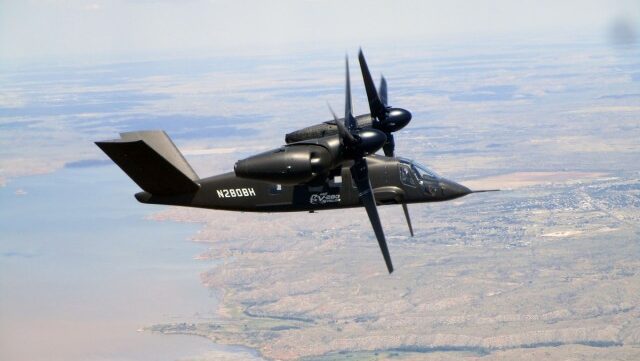
The Cheyenne II refueling requirement directly cascades into the Army's broader shift toward distributed operations and extended-range platforms. If the Army cannot solve this organically, it must either negotiate permanent Air Force tanker allocation (forcing tradeoffs in Ukraine air defense support, already delayed per April 17 signals) or accept reduced Cheyenne II operational range in high-intensity conflict.
Conversely, if the Army pursues dedicated Army tanker acquisition, this accelerates a latent inter-service competition over rotary-wing logistics that will surface in FY27 budget markup.
This signals a capability gap that will drive either procurement (Army tanker aircraft or contracted aerial refueling) or operational constraints on Cheyenne II range and endurance.
If the Army pursues organic tanker acquisition, this competes with existing procurement priorities and extends platform development timelines.
If the Army opts for contracted refueling or relies on Air Force KC-135/KC-46 support, it introduces operational dependency on inter-service coordination during contested environments—a vulnerability exposed by the Iran conflict logistics strain already documented in recent signals. The decision determines whether Cheyenne II can sustain rapid forward operations or remains tethered to forward operating bases.
The article does not specify whether the Army is pursuing new tanker procurement, relying on Air Force assets, or adopting alternative solutions like forward fuel caches; it also does not clarify whether this gap was identified during Cheyenne II development or emerged from operational planning post...
Fault Lines
Strategic intelligence, synthesized daily — with a public track record. Every call graded against what actually happened.