U.S.-Costa Rica Joint Maritime Op Signals Expanded Central American Counternarcotics Role
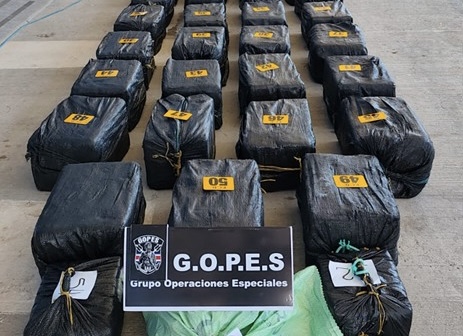
If Operation Blue Marlin becomes a recurring template, it commits U.S. Naval presence and training resources to Central American ports on a sustained basis, which competes with Indo-Pacific force posture planning.
Conversely, if this is a one-off demonstration, it signals SOUTHCOM's inability to secure consistent Congressional funding for dedicated Caribbean maritime assets — forcing the command to rely on partner-led operations rather than organic capability.
This operation indicates the U.S. is deepening operational reliance on Central American partners for maritime domain awareness and interdiction in drug transit zones — a capability gap the U.S.
Navy has struggled to fill with organic assets. Costa Rica's willingness to host and co-lead suggests sustained political buy-in for U.S. forward presence, but the article provides no data on interdiction results, tonnage seized, or operational tempo, making it impossible to assess whether this represents a genuine capability increase or a symbolic exercise.
The real signal is whether SOUTHCOM will resource this model across other Central American nations (Panama, Honduras, Guatemala) — that would indicate a structural shift in counternarcotics doctrine away from unilateral U.S. operations.
The article omits operational metrics (tonnage seized, vessels interdicted, trafficking routes disrupted), partner force contribution levels, funding mechanisms, and whether this operation model will expand to other Central American countries or remain Costa Rica-specific.
Fault Lines
Strategic intelligence, synthesized daily — with a public track record. Every call graded against what actually happened.