HII's ROMULUS USV Enters Navy Sea Trials; Medium Unmanned Platform Advances Testing Phase
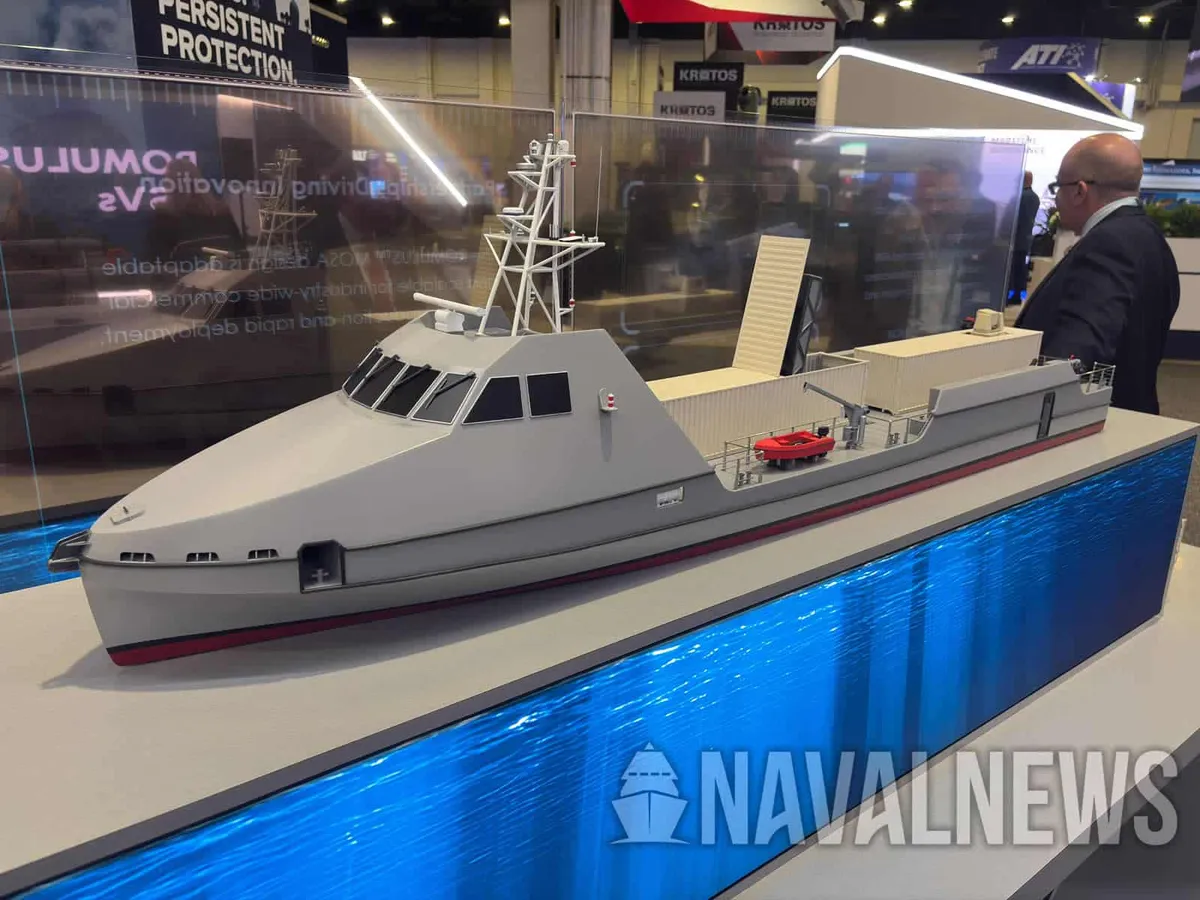
The timing is relevant to the broader AUKUS and allied unmanned surface vessel strategy. Australia and UK are both investing in unmanned logistics and ISR platforms for contested waters. If ROMULUS proves reliable, it becomes a candidate for allied procurement — particularly for the Royal Navy's Autonomous Mine Countermeasures program and potential Australian Navy follow-on orders.
However, this is not yet a multi-national commitment; it's a single-vendor design entering US Navy testing. The real decision point comes at full-rate production approval, which will reveal whether the Navy commits to distributed USV fleets or hedges with crewed alternatives.
This is an incremental milestone in a capability that the Navy has been pursuing for years, but it confirms HII has cleared the design gate and can now demonstrate seaworthiness.
The Navy's medium USV requirement sits between the Ranger-class and large unmanned platforms — filling a gap in distributed operations where crewed vessels are overkill but small USVs lack endurance. If ROMULUS completes sea trials on schedule (typically 12-18 months for Navy unmanned platforms), HII positions itself for a multi-unit procurement decision by late 2027, which would unlock sustained production funding.
Watch whether competing designs (General Dynamics or Bollinger) also advance to testing, or whether the Navy narrows to single-platform architecture.
What is the Navy's target production rate for medium USVs post-testing, and does HII's Tucson facility have dedicated capacity, or will this compete for resources against other HII unmanned programs?
Fault Lines
Strategic intelligence, synthesized daily — with a public track record. Every call graded against what actually happened.