Marine Corps Shifts SOUTHCOM Deployments to Fast Transport Ships as Amphibious Fleet Shortfall Deepens
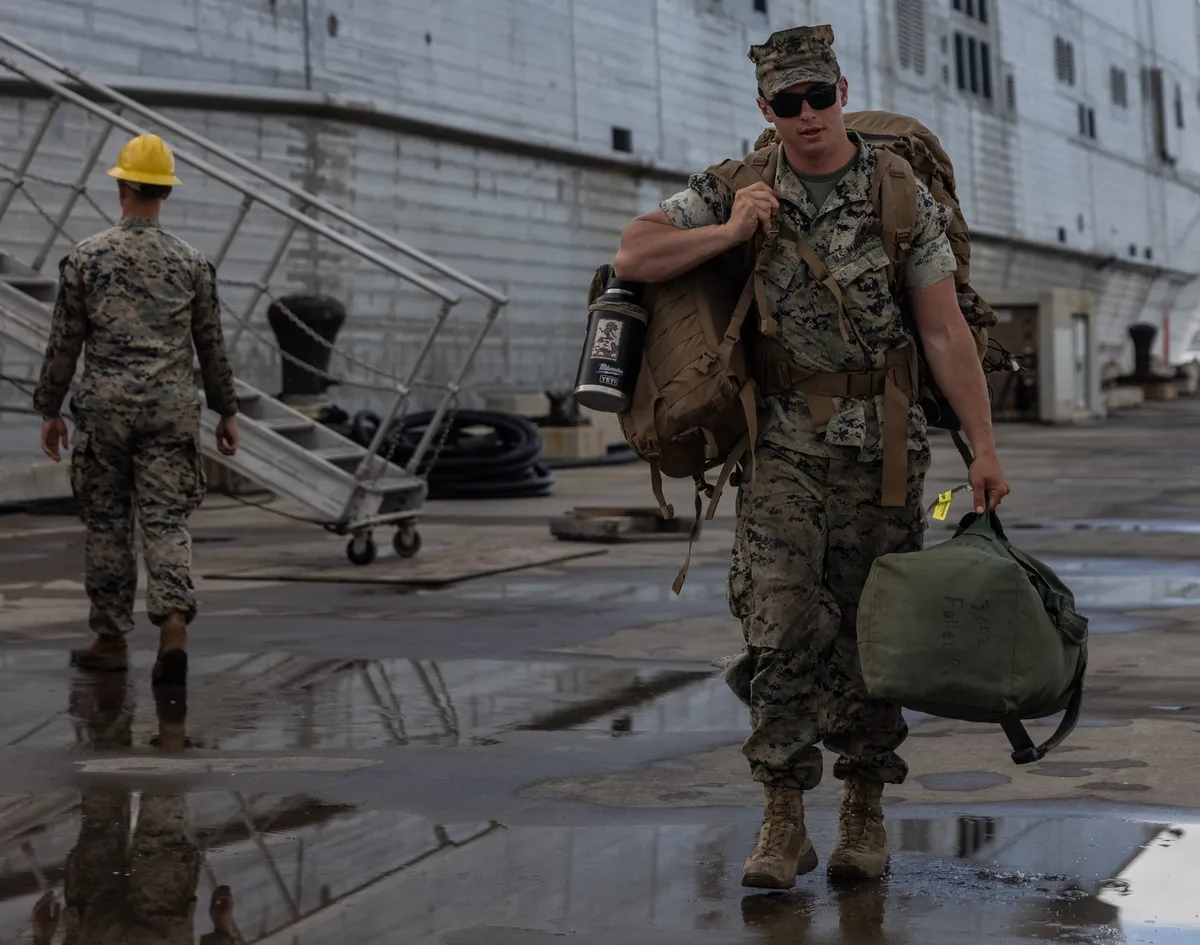
The amphibious shortfall directly constrains power projection in two theaters simultaneously. SOUTHCOM gets a degraded MEU; Pacific Command's ARG sustains higher utilization and earlier material fatigue.
This forces Navy leadership to choose between forward presence (a political/deterrence requirement) and maintenance (a readiness requirement)—a choice that will surface in FY27 FYDP negotiations when the building has to decide whether to fund Iwo Jima-class replacements or sustain current platforms longer.
Simultaneously, the shortage validates arguments from the Hill for unmanned surface vessel and distributed operations concepts, which could accelerate budget allocation away from traditional amphibious hulls and toward drone-based alternatives.
This is not a marginal logistics adjustment—it's an admission that the Navy's amphibious fleet cannot sustain the operational tempo the building is demanding.
The ARG-MEU model has been the backbone of forward presence for 30 years. Substituting Fast Transport ships (designed for logistics, not sustained amphibious operations) and sea bases (essentially floating warehouses) means SOUTHCOM gets reduced organic air support, no integrated air defense, and no dedicated command-and-control suite. The 22nd MEU will be tactically degraded.
The deeper problem: if the East Coast ARG is broken, the West Coast ARG is overloaded, and the Navy has no slack in the amphibious industrial base to surge production. This accelerates the timeline for the Navy's planned Amphibious Transport Dock (LPD-17 Flight II) replacements, but those don't enter service until 2032-2034. For the next 6-8 years, the Corps is operating with a structurally insufficient fleet.
Any contingency in the Caribbean or Gulf that requires sustained MEU presence now has to compete for scarce amphibious lift against Pacific demands—and the Pacific loses.
Is this a temporary deployment-cycle gap caused by maintenance and modernization schedules, or does it reflect a permanent reduction in the amphibious force structure?
Fault Lines
Strategic intelligence, synthesized daily — with a public track record. Every call graded against what actually happened.