Quad Mobilizes $20B for Critical Minerals Mining, Processing, Recycling
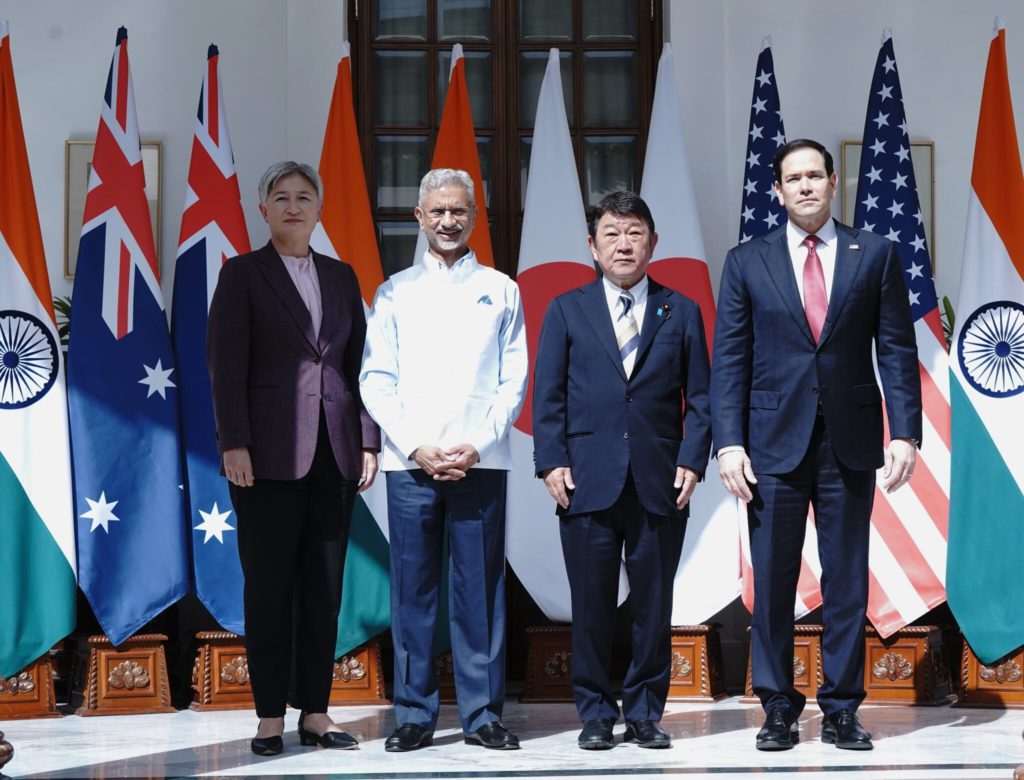
If the Quad actually deploys this capital into minority stakes in operating mines (rather than exploration plays), it creates a new leverage mechanism against Beijing — the ability to disrupt Chinese access to finished minerals by controlling feedstock. That forces Chinese firms to either accept Quad partners as joint-venture participants or build redundant supply chains at 20-30% higher cost.
The real constraint isn't the $20B — it's execution speed. China's rare-earth processing monopoly took 15 years to build. The Quad has 3-4 years before Taiwan contingency procurement locks in current supply chains.
This operationalizes the Quad's May 26 commitment into a specific capital deployment mechanism, forcing Japan, India, Australia, and the US to move from policy alignment to actual project selection within 6-12 months.
The $20B figure signals a willingness to compete directly with China's Belt and Road financing for mineral assets in Southeast Asia, Africa, and the Pacific — but only if the four governments can agree on which projects get funded and which private partners lead execution.
Watch whether the first tranche commitments (expected by Q4 2026) target lithium/cobalt in Indonesia/Philippines or rare earths in Vietnam/Laos; the geographic choice reveals whether the Quad is serious about supply-chain redundancy or just managing optics.
Does the $20B include concessional financing (below-market rates to compete with Chinese terms), or is it all commercial-rate capital? The article doesn't specify the funding structure, which determines whether Quad projects can actually win bids against state-backed Chinese competitors.
Fault Lines
Strategic intelligence, synthesized daily — with a public track record. Every call graded against what actually happened.