Ukrainian Strikes Force Russia to Import Chinese Optical Fiber for Drone Control Systems
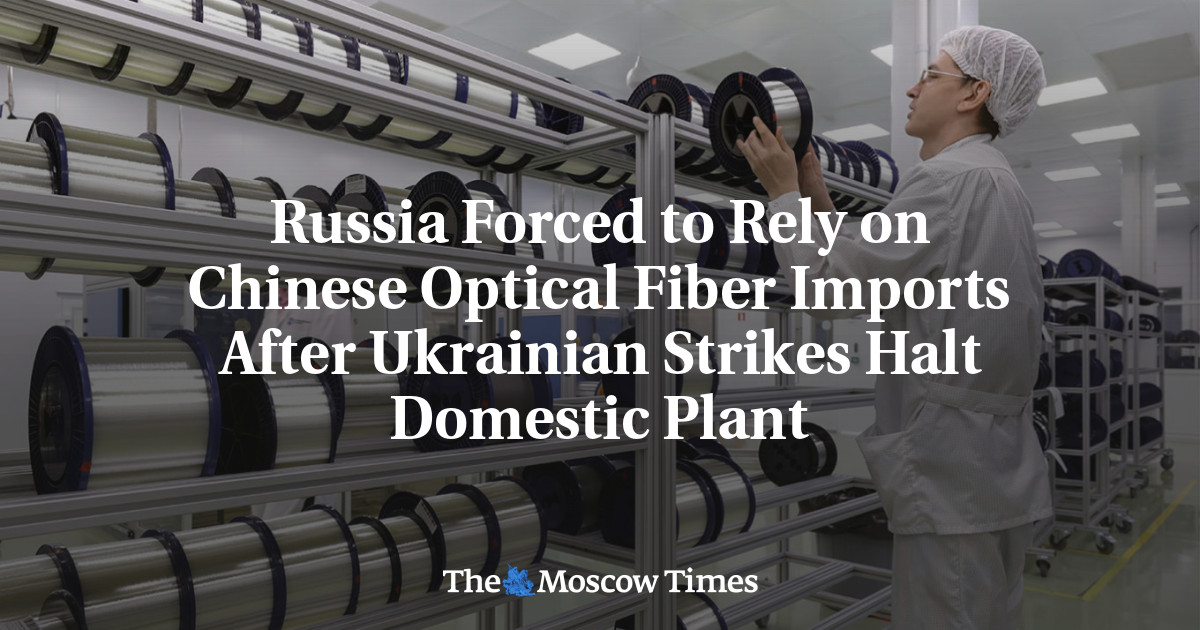
Fiber-optic dependency on China for drone control systems creates a procurement vulnerability that intersects export control and military operations: if the U.S. successfully pressures Beijing to restrict optical fiber exports (or if China voluntarily restricts them for political leverage), Russian drone operations could degrade without additional strikes.
This also forces allied drone programs to audit their own supply chains — if Russia is importing from China, Western programs may face the same sourcing bottleneck, creating pressure for domestic fiber-optic manufacturing capacity in NATO countries, particularly those fielding large autonomous systems fleets.
If Russia's domestic optical fiber production cannot be rapidly restored, Chinese supply becomes a critical dependency for drone operations — a capability that has driven Russian tactical effectiveness in Ukraine.
This creates a vulnerability: China could face U.S. pressure to restrict exports under existing dual-use controls, or could leverage supply as political leverage. For U.S. defense planners, this suggests Ukrainian strikes on Russian industrial targets can degrade specific warfighting capabilities faster than attrition alone.
For defense contractors, it signals that fiber-optic resilience and domestic sourcing may become a procurement priority for allied drone programs, particularly those designed to operate in contested electromagnetic environments.
The article does not identify the specific facility struck, its pre-strike production capacity, the timeline for restoration, current Chinese import volumes, or whether Russia is sourcing from multiple Chinese suppliers or a single point of failure.
Fault Lines
Strategic intelligence, synthesized daily — with a public track record. Every call graded against what actually happened.