Air Force Plans 6,000+ Annual Operations Across Four Pacific Airfields to Test Distributed Basing
The dispersal doctrine only works if Guam's air-defense layer can protect the training corridor — a constraint the notice doesn't mention and the EIS will have to address. If INDOPACOM cannot guarantee 24/7 layered defense over those four islands, the training environment becomes a target set, not a sanctuary.
Watch whether the EIS forces a reckoning on air-defense density or whether the command papers over it with assumptions about early warning and rapid egress.
INDOPACOM is operationalizing the only dispersed basing architecture it can actually defend in the Pacific.
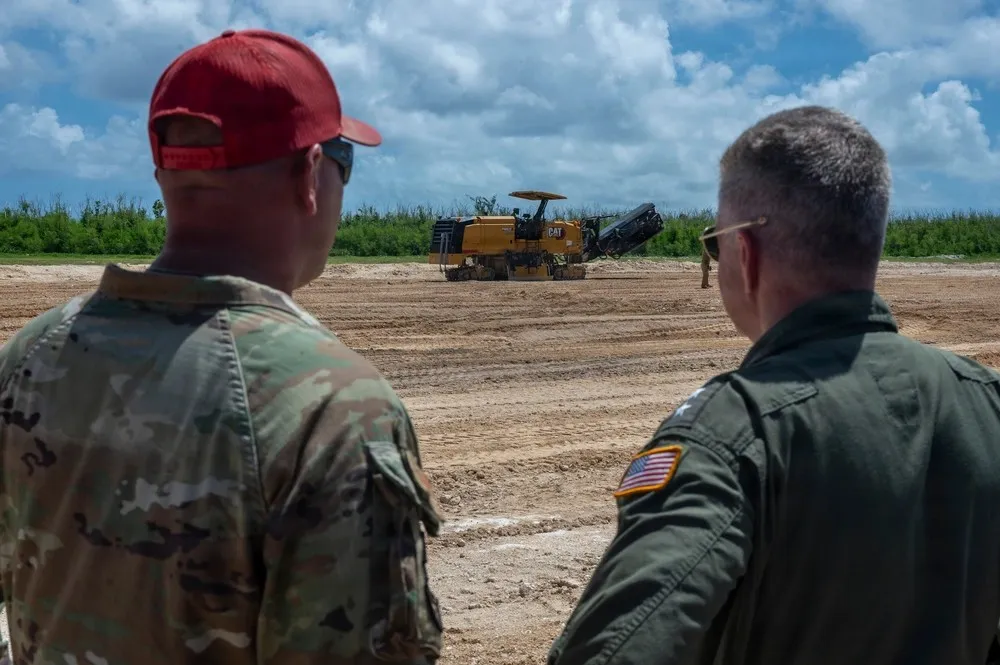
Tinian North Field's rehabilitation — inactive since WWII, under vegetation until late 2023 — signals that the command has abandoned the assumption that Guam's consolidated hub survives a peer conflict; 6,000+ operations annually across four islands within 100 nautical miles of Guam means the Air Force is training the force to fight from austere, distributed locations where no single strike can crater the entire posture.
The timeline matters: this EIS notice comes after three years of quiet infrastructure upgrades (port, fuel pipelines, utilities completed by mid-2026), which means the training ramp is imminent — expect initial exercises within 12 months of EIS approval.
Has the Air Force modeled whether four airfields 100 nm north of Guam actually survive a Chinese saturation strike, or is this ACE training designed to work around the assumption that Guam proper is contested?
Fault Lines
Strategic intelligence, synthesized daily — with a public track record. Every call graded against what actually happened.