Navy Accelerates Autonomous Maritime Drone Procurement via New Marketplace Model Amid Wartime Surge Demand
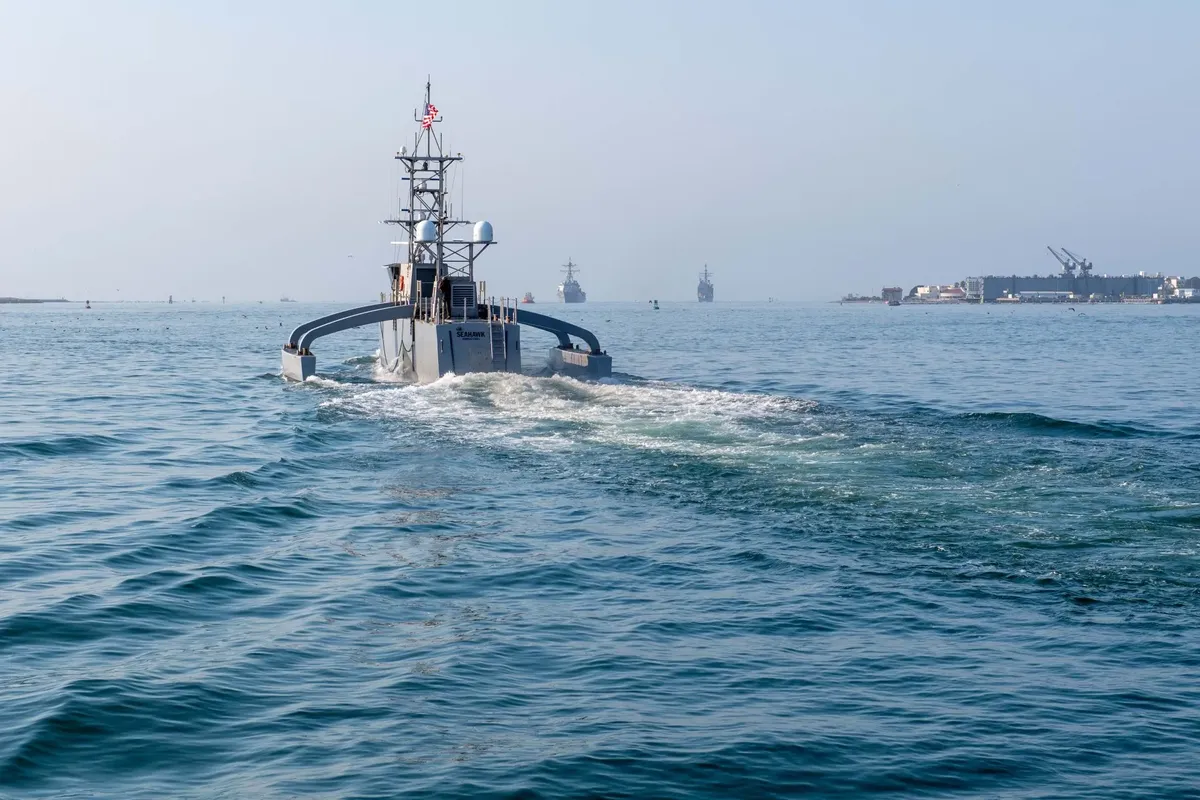
Autonomous resupply vessels reduce the logistics footprint required to sustain 50,000+ forward-deployed troops, directly lowering the crewing and escort vessel burden that would otherwise compete with strike platform availability in the Iran theater.
If the marketplace accelerates MUSV production from prototype timelines to wartime delivery (months, not years), the Navy frees up traditional sealift capacity for strategic reserve, increasing flexibility for secondary contingencies (Taiwan, Korea) during sustained Middle East operations.
This procurement restructuring directly supports the 50,000+ troop deployment and sustained wartime footing announced March 25 — autonomous resupply vessels reduce crewing requirements and accelerate logistics throughput in active conflict zones.
The marketplace model signals the Navy expects prolonged high-tempo operations and is optimizing supply chain velocity over traditional competitive bidding cycles.
Vendors with existing MUSV platforms (Autonomous Surface Vehicles Inc., Clearpath Robotics, others in the autonomous maritime segment) gain preferential access to wartime-scale contracts; traditional prime contractors without autonomous watercraft capabilities face exclusion from this surge capacity unless they acquire or partner with specialists.
The real constraint is production capacity — DefenseScoop does not specify current Golden Fleet inventory or target surge numbers, leaving unclear whether this is a 10-vessel acceleration or a 100-vessel one.
The article does not specify: (1) current Golden Fleet inventory or surge target; (2) which vendors are included in the new marketplace; (3) contract values or timeline for first deliveries; (4) whether this marketplace replaces or supplements existing MUSV contracts.
Fault Lines
Strategic intelligence, synthesized daily — with a public track record. Every call graded against what actually happened.