Anduril YFQ-44A Flies Dual Autonomy Stacks, Testing Vendor Interoperability
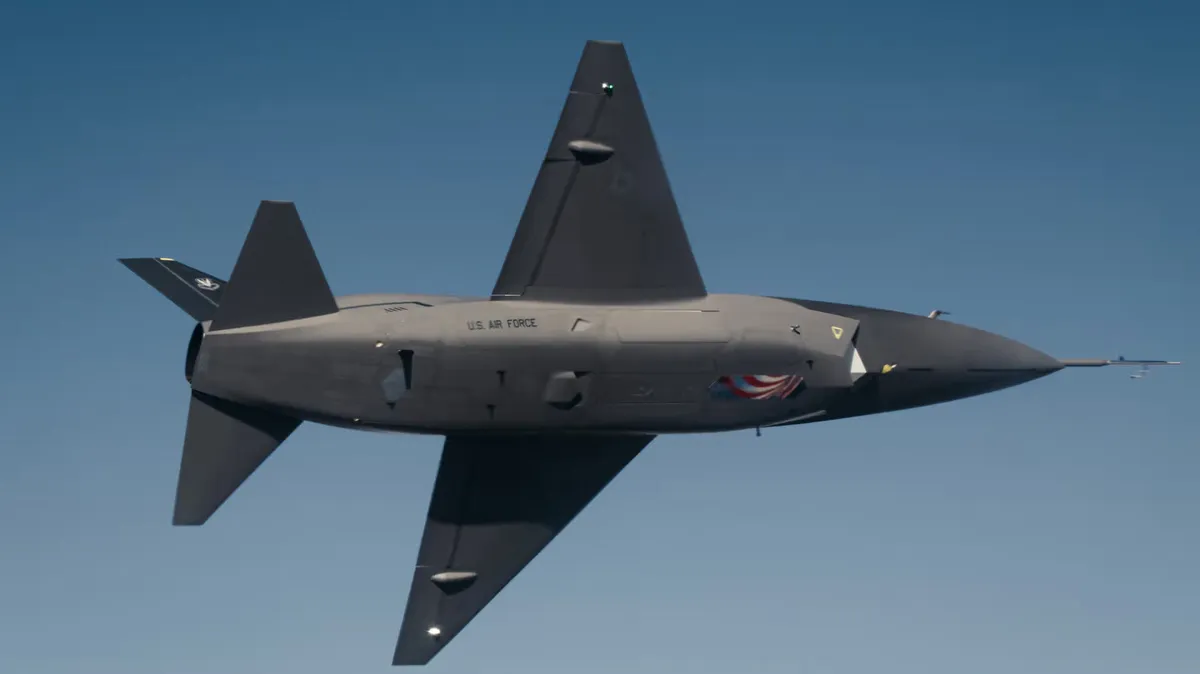
Dual-stack autonomy capability removes a key acquisition risk for the Air Force's CCA program: vendor dependency on a single autonomy provider. If YFQ-44A can certify multiple approved autonomy suites, the Air Force can mandate open-architecture standards in CCA RFPs, forcing competitors to adopt interoperable autonomy APIs rather than proprietary stacks.
This shifts procurement leverage from autonomy vendors to airframe integrators like Anduril, compressing margins for pure-play autonomy firms (like Scale AI or Shield AI if they were primes) and favoring platform companies that control the integration layer.
This is the first public evidence that a U.S. crewed-unmanned teaming platform can execute dual-stack autonomy in flight, which matters for three reasons: (1) It validates a hedging strategy against single-vendor lock-in — critical for a program expected to scale across multiple service branches; (2) It suggests the YFQ-44A's architecture supports runtime autonomy switching, reducing operational risk if one stack fails or is disabled; (3) For Anduril's competitors (General Atomics, Kratos, Northrop's RQ-180 equivalent), it raises the bar for autonomy maturity on their own CCA candidates.
The test does NOT prove operational superiority or that dual-stack autonomy will be required by the Air Force — only that it is now technically feasible. Success here likely accelerates autonomy certification timelines and may influence CCA procurement criteria.
The article does not identify which vendors supplied the two autonomy stacks, the specific mission phases tested, whether the aircraft switched between stacks mid-flight or ran them in parallel, or any performance metrics (latency, decision accuracy, handoff stability).
Fault Lines
Strategic intelligence, synthesized daily — with a public track record. Every call graded against what actually happened.