Hanwha Ocean Unveils Dual-Use Arsenal/Drone Vessel; Signals South Korean Shipbuilder Expansion into US Market
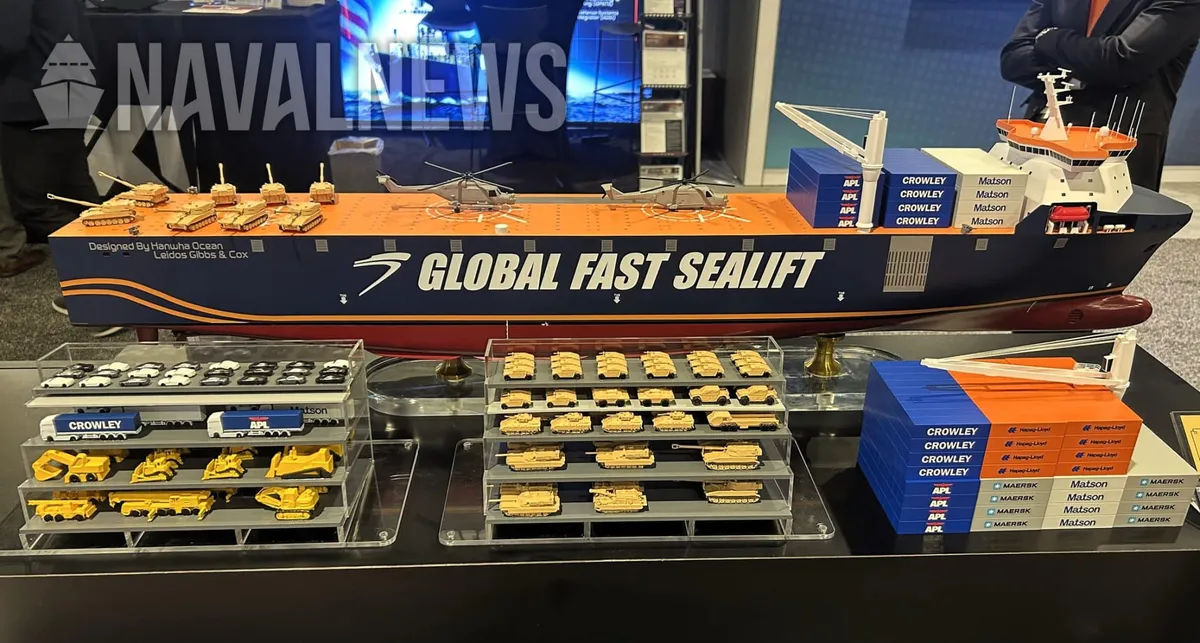
A South Korean shipbuilder entering the U.S. sealift market at a moment of peak defense spending and sustained carrier operations creates a procurement opening but triggers immediate industrial base pushback.
If Hanwha wins a production contract, it shifts sealift manufacturing away from U.S. yards (Austal Mobile, Philly Shipyard) and potentially into South Korea, where labor costs are lower — this compresses margins for domestic primes and forces Congress to choose between cost control and workforce preservation.
Simultaneously, it deepens the U.S.-ROK defense industrial tie (already strong via AUKUS and F-35 co-production), which may accelerate Korean access to U.S. shipbuilding standards and classified combat systems integration.
This is a market entry move, not a procurement event.
Hanwha is using a public platform to signal capability and intent to U.S. Navy planners and Congress ahead of what will likely be a series of competitive bids. The timing matters: the Navy's FY27 budget request includes $1.5T in defense spending (42% increase), and the third carrier strike group just deployed to CENTCOM — sustained surge operations favor multi-platform logistics vessels.
However, this vessel competes directly with existing U.S. prime platforms (Austal, General Dynamics) and foreign yards already bidding into allied sealift programs (Damen, Fincantieri). Hanwha's advantage is cost and production capacity; the risk is that U.S. shipbuilders will lobby Congress to restrict foreign content or require domestic assembly.
Watch whether this vessel appears in any FY27 or FY28 Navy battle force structure studies.
Does the design target a specific Navy requirement document (e.g., an unfunded priority list or capability gap), or is Hanwha essentially prospecting? If the latter, the announcement has limited decision weight — it's marketing, not procurement.
Fault Lines
Strategic intelligence, synthesized daily — with a public track record. Every call graded against what actually happened.