Turkey Commits $11B to Eurofighter Typhoon, Exits F-35 Program Orbit
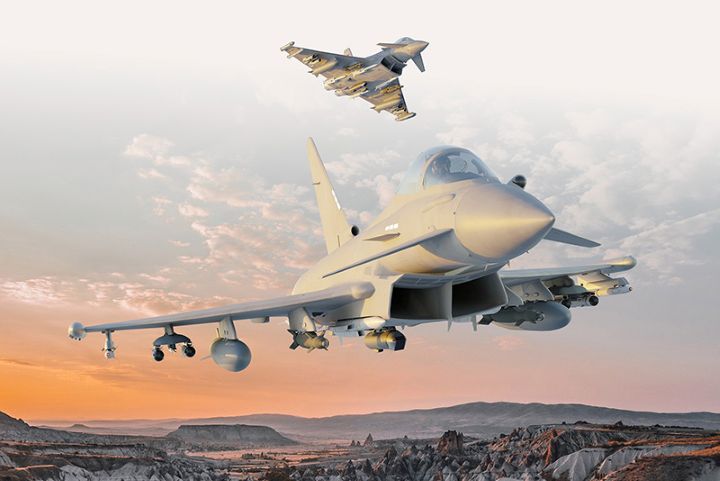
The Eurofighter pathway also signals Turkey's hedging against potential F-16 supply constraints. If US export controls tighten on Turkey (as they have intermittently over Cyprus and Kurdish operations), Ankara's air force would have been dependent on a single supplier. Eurofighter diversifies that risk — Airbus, BAE, and Leonardo are separate from US licensing.
However, this creates a second-order problem for NATO: Turkish pilots trained on Eurofighter avionics and weapons integration cannot rapidly cross-train onto Block 70 F-16s or F-35s in a high-intensity scenario. SACEUR now has to assume Turkish air units operate on a separate targeting cycle from allied air operations, which degrades the integrated air defense architecture NATO has spent 20 years building.
Turkey's procurement choice forces NATO to absorb a capability gap in the Eastern Mediterranean and Aegean without the interoperability layer the F-35 was supposed to provide.
The $11B commitment locks Turkish air operations into a non-US fighter ecosystem for 20+ years, which means NATO air coordination over the Aegean and Turkish-Greek contested waters now requires separate datalink architecture and training pipelines. This surfaces immediately: Turkish Eurofighter squadrons will not plug into NATO's AWACS or allied air defense networks without costly bridge systems.
Watch whether Greece accelerates its own fighter modernization (currently F-16 Block 70) to maintain air superiority assumptions in contested airspace — if Athens perceives a capability gap, it will bid new procurement into the FY26-27 Greek defense budget.
Does the $11B figure include sustainment, training, and spares for the full 25-year platform lifecycle, or is it flyaway unit cost only? The contract structure determines whether this is a one-time procurement or a recurring logistics burden on Turkish defense spending.
Fault Lines
Strategic intelligence, synthesized daily — with a public track record. Every call graded against what actually happened.