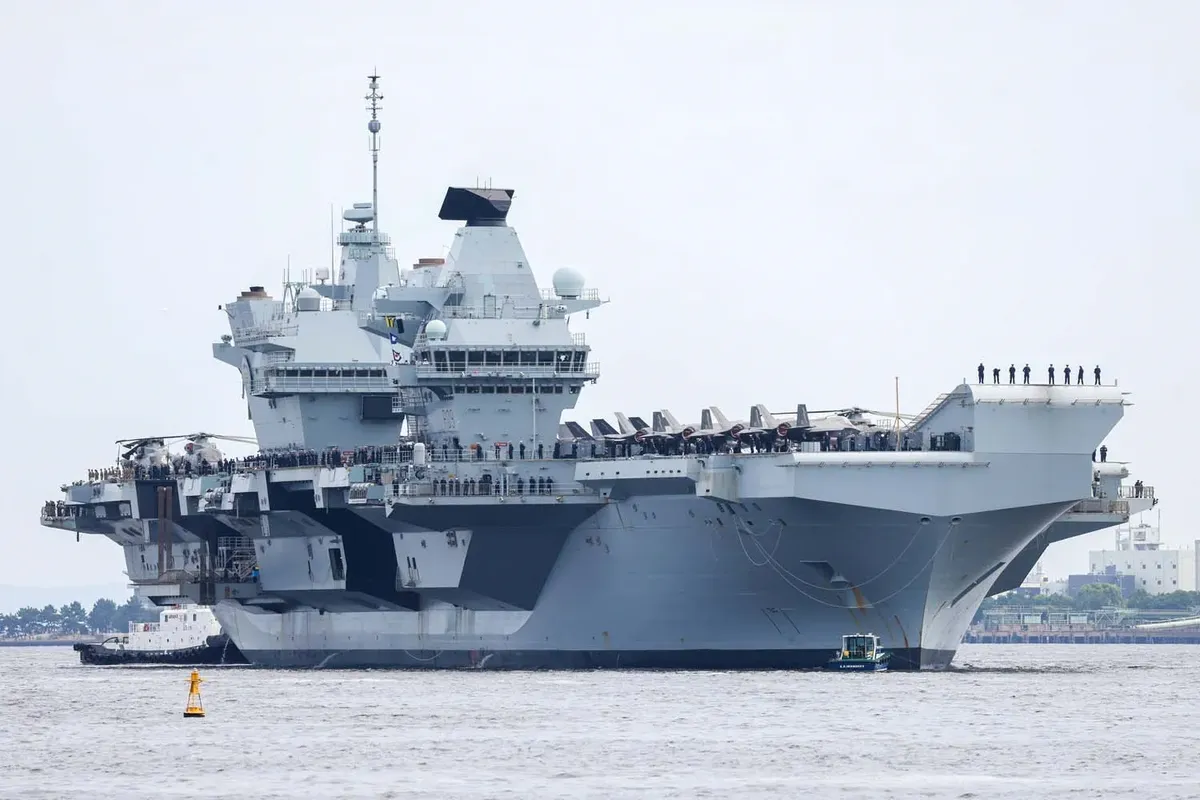
HMS Queen Elizabeth Deployed With 24 F-35s but Spares for 12, Exposing UK Carrier Readiness Gap
The spares shortfall is not a procurement problem — it's a supply chain visibility problem. If the PAC discovered this via parliamentary inquiry rather than routine readiness reporting, the MoD's logistics tracking system is failing to flag inventory-to-airframe mismatches before deployment.
Lockheed Martin's F-35 spares production (sourced across multiple Tier 1 suppliers including Northrop Grumman and RTX) may not be scaling to match the Royal Navy's expansion from 12 to 24 jets. This will ripple across AUKUS: Australia and Canada operate the same platform and face the same supplier bottleneck.
If the US F-35 Program Office doesn't address spares surge capacity, allied carriers will either reduce air wings or accept higher operational risk.
The Royal Navy cannot sustain combat air operations at declared strength without a logistics overhaul that will cost time and money.
If the carrier sortied with 24 jets but could only cannibalize parts to keep 12 operational, the actual available combat power is 50% of the headline number — and that assumes no battle damage or unplanned failures.
The Ministry of Defence faces a choice: either pre-position F-35B spares at the rate of 1 spare for every 2 aircraft (doubling the current inventory bill), or reduce the declared air wing from 24 to 12 jets and absorb the reputational cost of a half-strength carrier. Watch the next Defence Procurement Committee hearing (likely June 2026) for whether MoD commits to a specific timeline and budget for spares correction.
What is the actual current F-35B spare parts inventory for the Royal Navy, and how does it compare to NATO/US Navy ratios for the same platform? Is this a UK-specific logistics failure, or does it reflect a systemic JSF spares production bottleneck affecting all operators?
Fault Lines
Strategic intelligence, synthesized daily — with a public track record. Every call graded against what actually happened.