Saab-Babcock team Arrowhead 120 for Swedish frigate program
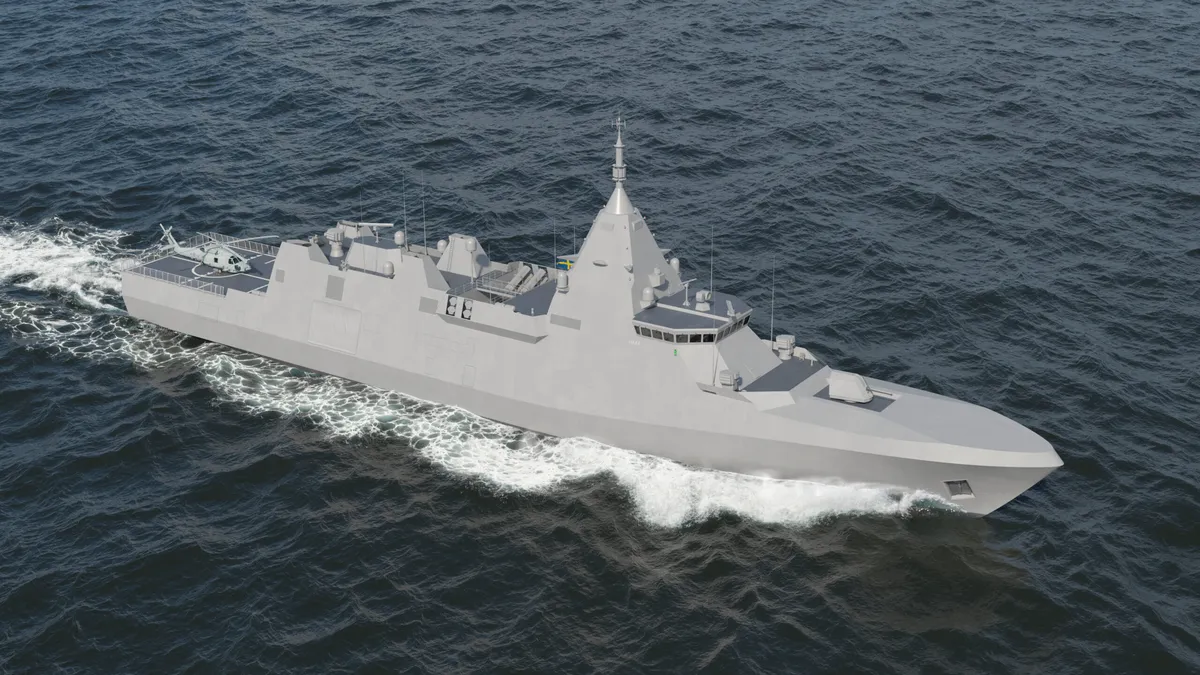
Primarily a Market Forces story: Saab and Babcock are competing for a naval procurement contract, and design selection affects industrial supply chain alignment. Secondary connection to Power Projection: frigate design choice influences Sweden's naval capability and operational doctrine, but the article contains no data on performance, capability, or force posture implications.
Limited cross-pillar relevance—this is a bid announcement, not a capability statement or geopolitical signal.
This signals Saab's strategy to leverage an existing, mature hull design rather than develop a new one—a cost and schedule hedge for a mid-tier naval power.
The Arrowhead 120 is a German design (ThyssenKrupp Marine Systems); its selection would bind Swedish frigate capability to a non-NATO partner's industrial base for production support and future modernization, creating a dependency on German export approval and supply chain. For Babcock, this is a bid for a European naval integration contract; if won, it represents a foothold in Scandinavian defense procurement.
The outcome determines whether Sweden's frigate fleet architecture aligns with German or domestic Swedish subsystems—a minor but real industrial policy consequence. No evidence of cost, timeline, or competing proposals exists in this article.
The article does not identify competing bids, the Swedish Navy's stated requirements, program timeline, or estimated contract value. It also does not clarify whether Sweden prefers a foreign design or has domestic alternatives under consideration.
Fault Lines
Strategic intelligence, synthesized daily — with a public track record. Every call graded against what actually happened.