NASA Accelerates Artemis Cadence With 2027 Mission Addition, Reshaping Lunar Architecture
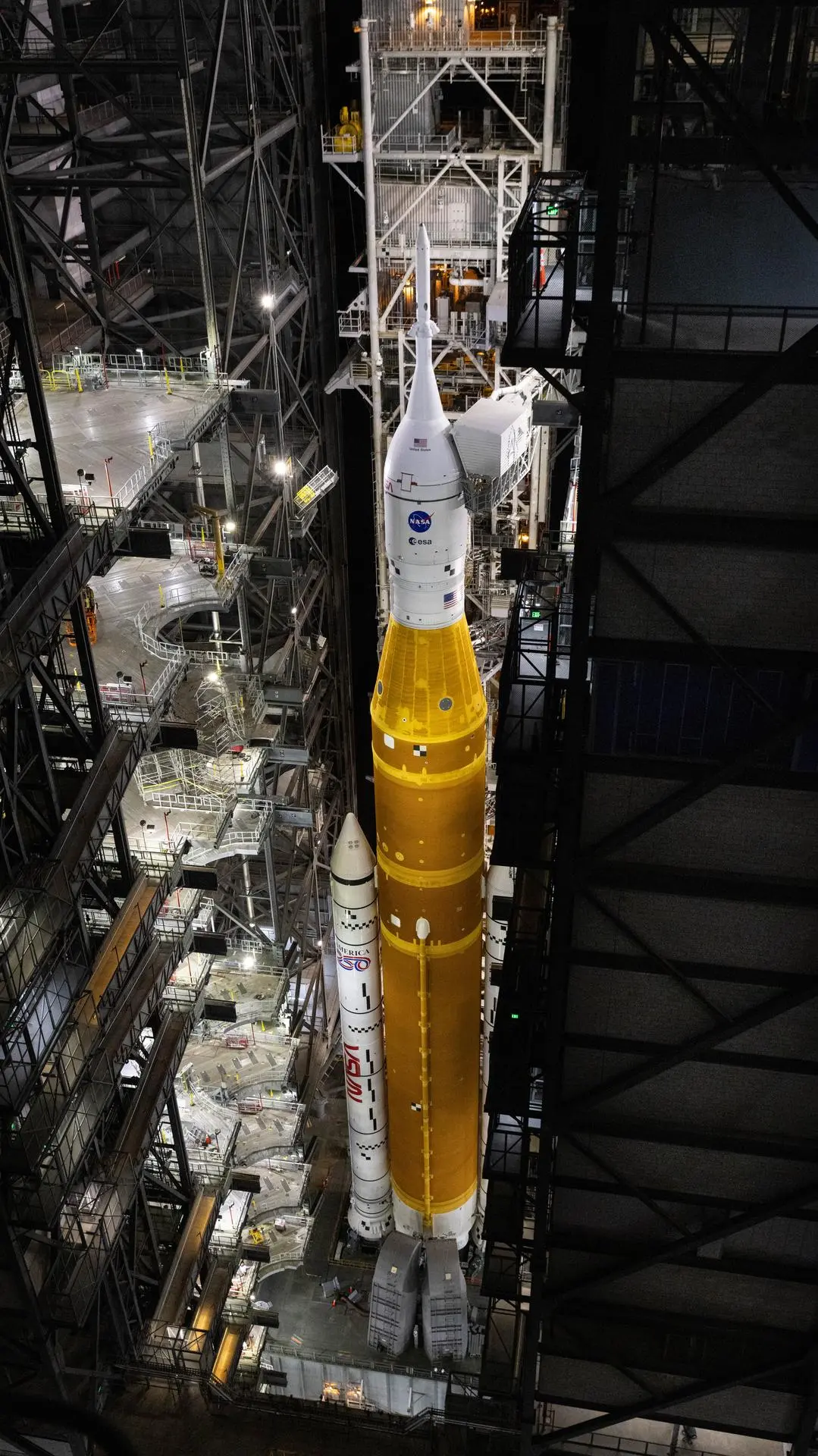
Compressed Artemis cadence forces Boeing and Lockheed Martin to front-load production tooling and workforce hiring in FY26-27, raising fixed costs before revenue flows. If Congress does not appropriate additional funding, this acceleration competes with other NASA/DoD space priorities (National Space Launch System sustainment, commercial crew variants) for existing budget authority, delaying non-Artemis programs.
Conversely, if new funding materializes, the sustained launch demand strengthens the industrial base's argument for long-term contracts, affecting commercial launch competition and allied access to U.S. heavy-lift capacity.
This acceleration forces near-term production and integration decisions across the aerospace industrial base.
Boeing (SLS/core stage), Lockheed Martin (Orion capsule), and their supply chains now face compressed schedules for the 2027 mission. The standardized vehicle configuration likely locks design choices that reduce future flexibility but enable parallel production — a trade-off that will surface in FY27 budget requests and contractor margin negotiations.
If NASA maintains this cadence beyond 2027, it signals sustained demand for large-lift launch capacity and deep-space propulsion, anchoring long-term supplier contracts and workforce planning. The announcement does not specify funding mechanisms or whether this reflects reprogramming within existing budgets or new appropriations.
The article does not detail which specific missions are being added, the funding source (new appropriations or reallocation), the timeline for each mission beyond '2027,' or how standardized vehicle configuration differs from current Artemis architecture.
Fault Lines
Strategic intelligence, synthesized daily — with a public track record. Every call graded against what actually happened.