South Korea Announces Domestic Nuclear Attack Submarine Program to Counter North Korean Missile Threats
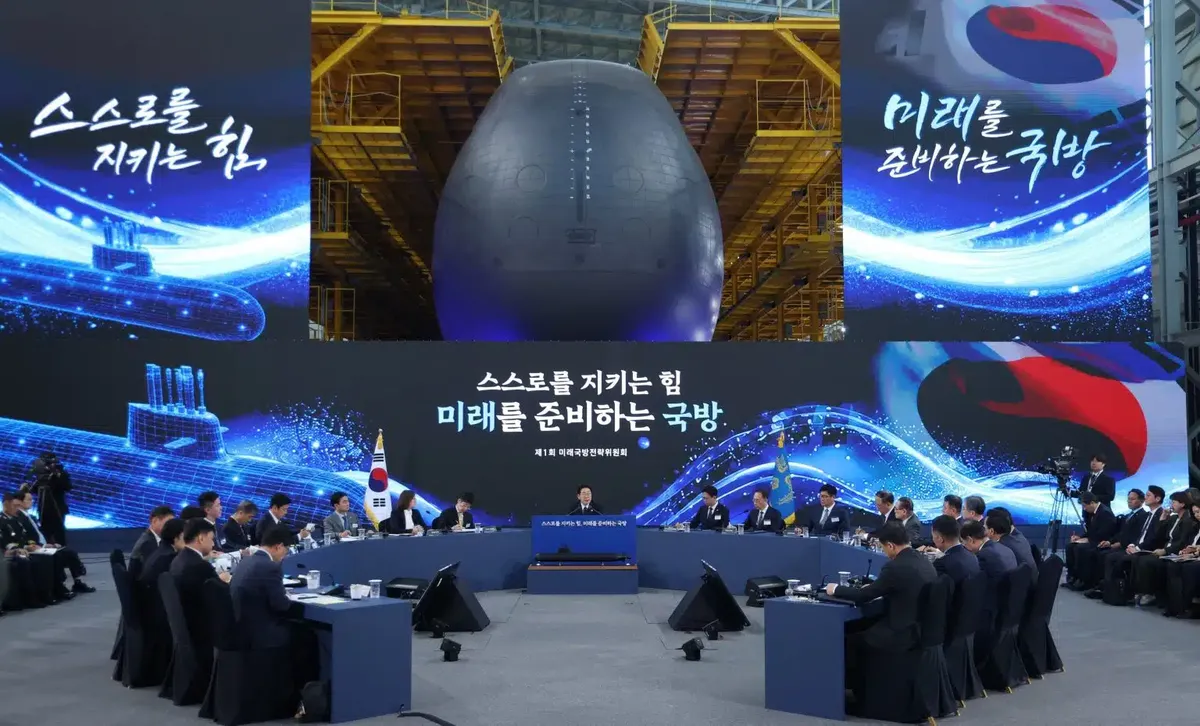
If South Korea achieves serial production of even two submarines per decade, it reduces the operational burden on US attack boats covering both the Korean Peninsula and the First Island Chain — but only if those boats are integrated into INDOPACOM's force-posture planning.
More immediately, the announcement competes for the same industrial base that AUKUS commitments (Virginia-class transfers to Australia, AUKUS SSN construction at Adelaide) are already straining. South Korea's domestic program also raises a question for Japan: if Seoul is pursuing nuclear submarines, Tokyo's constitutional constraints on nuclear propulsion become a strategic liability rather than a legal technicality.
Seoul is closing a critical capability gap that has made it dependent on US nuclear submarine support during crises — and doing so on a timeline that compresses allied submarine production schedules across the Pacific.
South Korea's domestic nuclear submarine program requires technology transfer, industrial scaling, and regulatory approval from the US and International Atomic Energy Agency; if Seoul meets its stated timeline, it will be competing for the same skilled welders, reactor engineers, and supply-chain slots that Newport News and Electric Boat already compete for.
The decision also signals that Seoul no longer trusts extended deterrence alone — a shift that will reshape how INDOPACOM plans submarine-based cover for the Taiwan Strait and Korean Peninsula contingencies.
What is South Korea's stated operational timeline for the first domestic nuclear submarine, and does it assume continued US technology transfer or indigenous reactor design? Does the program include a stated production rate, or is this a single-unit development effort?
Fault Lines
Strategic intelligence, synthesized daily — with a public track record. Every call graded against what actually happened.