MBDA Spear 3 Completes First F-35B Flight Test; Operational Deployment Targeted for Late Decade
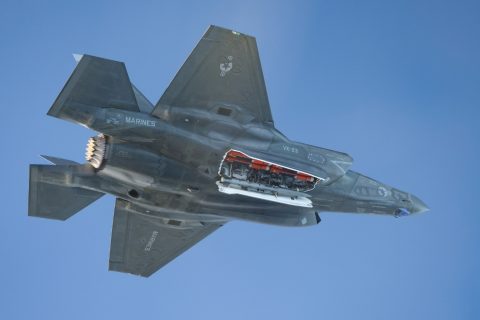
Spear 3 IOC in the late 2020s means the UK and Italy will field a precision strike weapon roughly 3-4 years after the US expects full F-35 Block 4 deployment. This creates a capability mismatch: UK/Italian F-35Bs will be tactically modern but operationally constrained to older munitions until Spear 3 qualifies, forcing those air forces to maintain dual targeting workflows during the transition.
If Spear 3 seeker performance lags the AIM-120D's guidance fidelity in dense target environments—a common integration risk—allied planners will face a hard choice between deploying the new weapon at reduced effectiveness or reverting to US munitions, which undercuts the political rationale for European autonomy.
The UK and Italy are now locked into a multi-year integration and qualification timeline that will consume F-35B test capacity and delay other avionics upgrades competing for the same development budget.
Spear 3 represents a European-led standoff precision strike capability independent of US munitions, which means NATO's integrated air defense planning must now account for a non-US weapon system with different seeker performance, guidance latency, and interoperability assumptions—forcing SACEUR and allied air operations planners to validate new targeting workflows before the weapon reaches IOC.
Watch for the next integration milestone: the first live-fire test, which typically occurs 18-24 months after envelope expansion flights and will reveal whether the weapon's autonomous guidance performs as modeled in contested electromagnetic environments.
Does the F-35B integration impose any delay on Block 4 cockpit software delivery, or are the test sorties being absorbed within existing development capacity?
Fault Lines
Strategic intelligence, synthesized daily — with a public track record. Every call graded against what actually happened.