Anduril Demonstrates Mid-Flight AI Pilot Swap on YFQ-44A Combat Aircraft
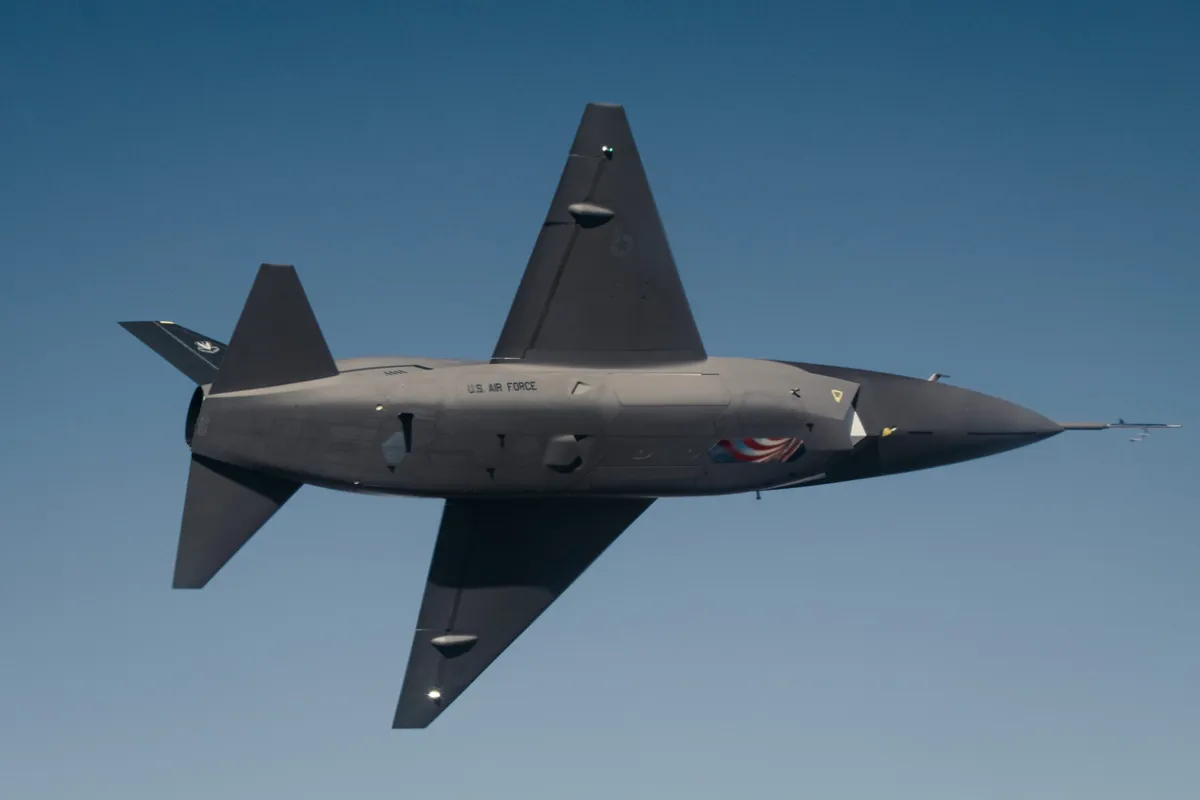
Anduril's demonstrated redundancy architecture raises the technical bar for CCA program competitors, forcing Boeing and Kratos to either accelerate their own fault-tolerance demonstrations or accept a lower technical score in Air Force evaluations.
This compresses the qualification timeline for all contenders, which delays Milestone B decision and stretches FY27 procurement budgets across multiple vendors simultaneously — a rare scenario where one competitor's advance forces budget reallocation across the entire industrial base rather than shifting share between them.
If confirmed as a repeatable capability, mid-flight AI pilot switching addresses a critical operational risk in autonomous aircraft: single-point software failure.
This forces competitors (Kratos, General Atomics, Boeing) to accelerate redundancy architecture in their own CCA bids, potentially compressing development timelines and raising qualification costs. For the Air Force, it validates a key requirement in the CCA program — graceful degradation without pilot takeover — which could influence final selection criteria.
The immediate question is whether this was a one-off demonstration or an integrated design feature; if the latter, Anduril's YFQ-44A moves ahead on a critical technical gate that other competitors may not have demonstrated.
The article does not specify whether the software switch was automatic (triggered by failure detection) or manual (pilot-commanded), how long the transition took, whether both systems remained active during the switch, or whether this capability is integrated into the baseline design or a proof-of-c...
Fault Lines
Strategic intelligence, synthesized daily — with a public track record. Every call graded against what actually happened.