Royal Navy Type 45 Deploys to Eastern Mediterranean Amid Active US-Israeli Campaign Against Iran
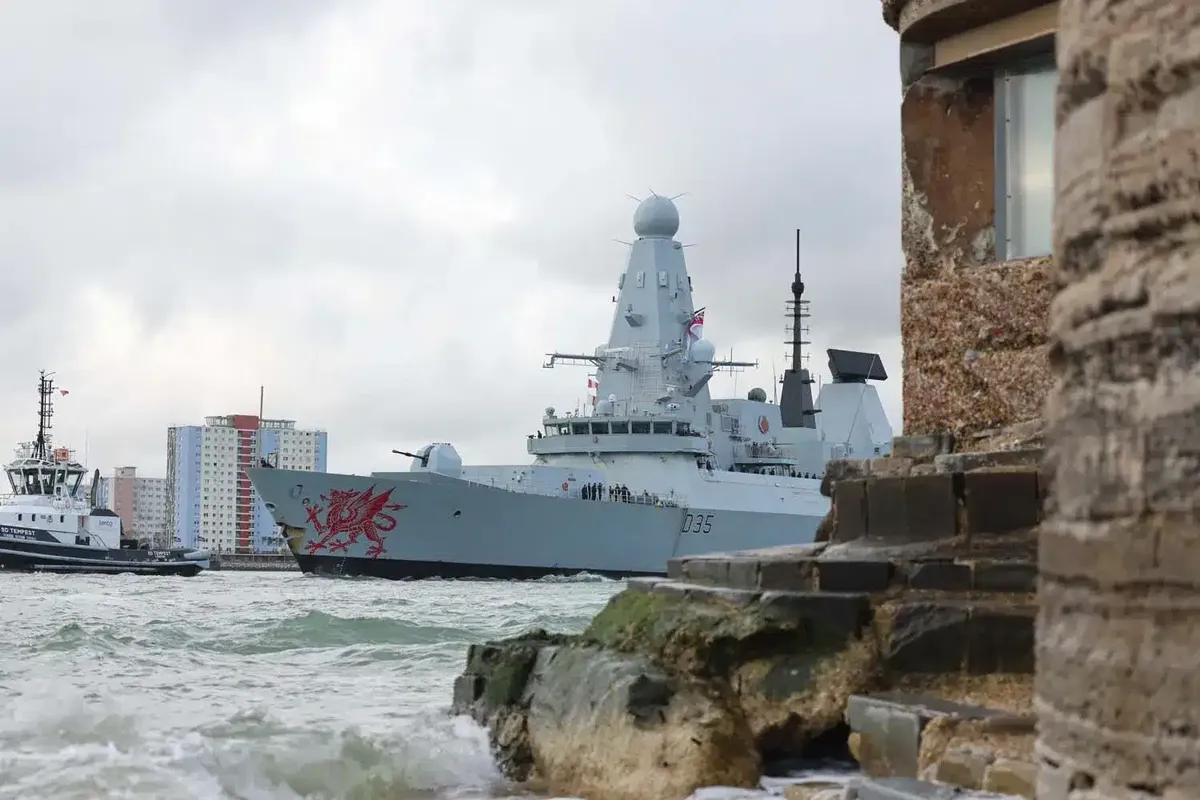
UK air-defense capacity committed to the Eastern Mediterranean reduces NATO's available short-range air defense for European contingencies and the North Atlantic. If Iranian strikes on merchant shipping in the Strait of Hormuz escalate (already 10 vessels hit), HMS Dragon's presence obligates UK engagement with IRGC naval forces, converting a US-Israel-Iran conflict into a direct UK-Iran military relationship.
This also signals to European allies that escalation is now a NATO-adjacent theater, not a contained US-Israeli operation, which may accelerate European arms shipments to Israel or trigger EU diplomatic isolation from the UK-US position.
This is a NATO capability insertion into an active conflict zone during the hottest phase of US-Israeli operations against Iran.
The Type 45's air-defense systems (SAMPSON radar, Sea Viper missiles) are optimized for contested airspace — meaning the Royal Navy is positioning for direct exposure to Iranian ballistic and cruise missiles, not merely presence.
The timing signals UK commitment to the escalation rather than diplomatic off-ramps, and commits British air-defense capacity that would otherwise be available for North Atlantic or European contingencies.
If Iranian strikes on Gulf shipping intensify (10 vessels already hit per prior signals), HMS Dragon becomes a high-value target for IRGC anti-ship operations, creating potential for UK casualties and forcing a direct UK-Iran military confrontation.
The article does not specify HMS Dragon's assigned area of operations (Eastern Mediterranean is broad), rules of engagement, or whether this is a unilateral UK decision or a NATO/Five Eyes coordinated deployment.
Fault Lines
Strategic intelligence, synthesized daily — with a public track record. Every call graded against what actually happened.