Hegseth Claims Ceasefire Pauses War Powers Clock; Legal Challenge Looms
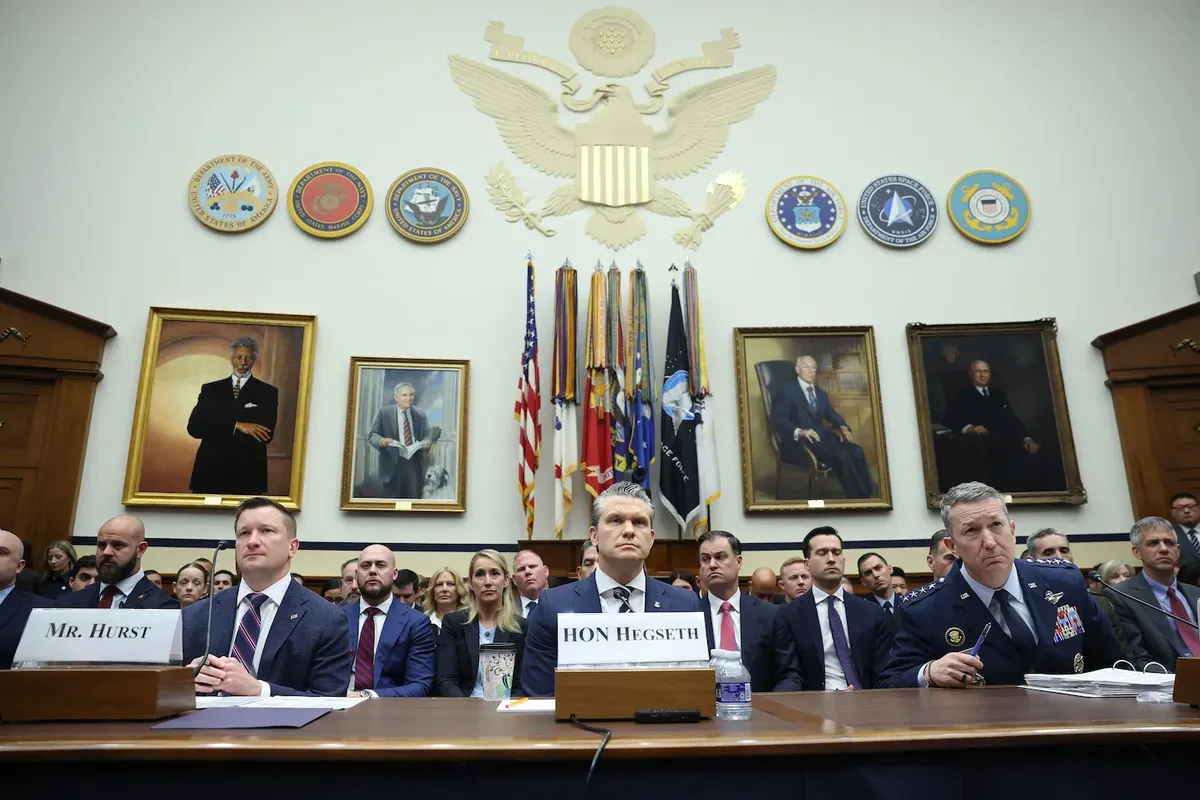
The War Powers violation creates a hard deadline for congressional action that could force authorization or withdrawal, directly constraining the military operations already underway in Lebanon and the broader Iran blockade.
If Congress votes down a war authorization — or fails to pass one before the 30-day clock expires — the Navy must cease Hormuz blockade operations, ending the oil export embargo and collapsing the Trump administration's leverage over Iran's nuclear capitulation demand. This transforms a military question into a legislative one, and the vote count is uncertain given European and German pushback on war costs.
Hegseth is attempting a legal maneuver that will not survive scrutiny.
The War Powers Act's 60-day clock does not pause for ceasefires — it runs from the first introduction of armed forces into hostilities. Israeli Chief of Staff Eyal Zamir explicitly stated on April 30 that 'there is no ceasefire' and forces continue operations. Congress will read this as a dodge.
The deadline has passed; the administration is now in violation unless it notifies Congress of a formal extension under 50 U.S.C. § 1544(b). Expect immediate demands from the Hill for a written legal opinion and a formal war powers notification. If the administration refuses to file, it triggers a 30-day clock for congressional action — either authorization or forced withdrawal.
This is no longer a procedural question; it's a constitutional one, and it will fracture the fragile Republican consensus on Iran strategy.
Has the administration filed a formal War Powers Act notification with Congress as of April 30, or is Hegseth's ceasefire argument an attempt to avoid filing altogether?
Fault Lines
Strategic intelligence, synthesized daily — with a public track record. Every call graded against what actually happened.