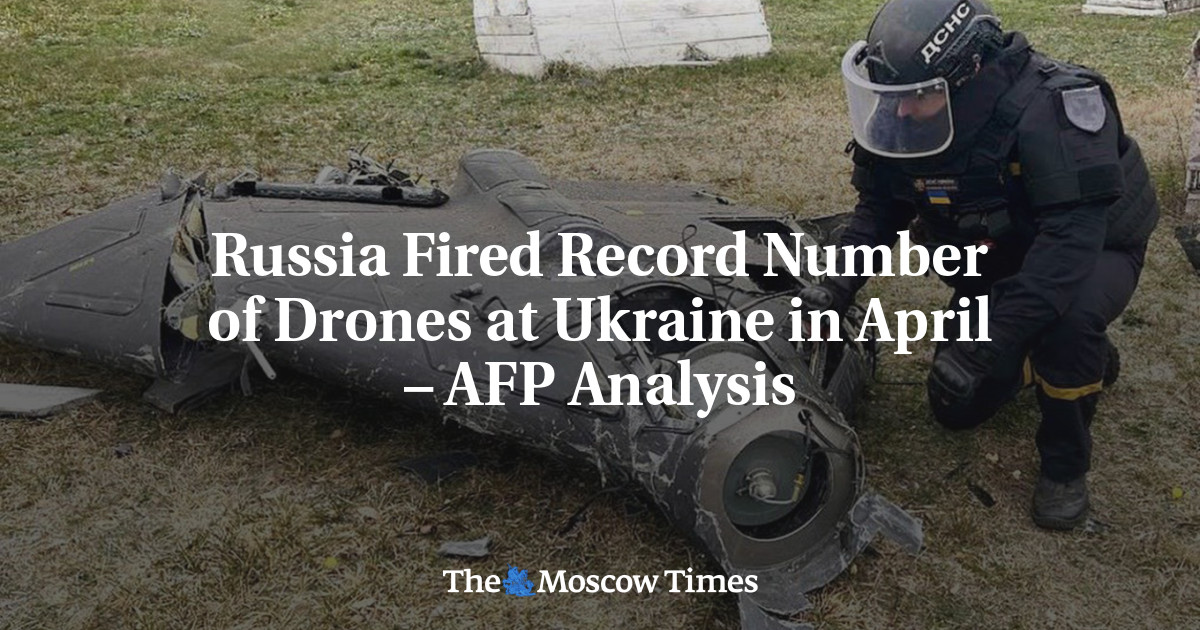
Russia Fires Record Monthly Drone Attacks on Ukraine; Daylight Targeting Escalates Civilian Risk
Russian drone production constraints now feed back into the Ukraine energy weapon dynamic: as Ukraine degrades Russian refinery capacity (April output hit 2009 lows), Moscow compensates by increasing seaborne crude imports, which extends supply lines vulnerable to Ukrainian naval strikes.
Simultaneously, peak drone production diverts manufacturing capacity from other air defense and missile systems, narrowing Moscow's options to counter Ukrainian strikes on rear-area infrastructure. This creates a procurement squeeze — Russia cannot sustain both maximum drone volume and air defense modernization.
This is volume escalation within an existing attrition campaign, not a tactical pivot.
Russia is burning through drone inventory at peak rates while Ukraine's refinery strike campaign (hitting Russian output to 17-year lows in April) forces Moscow to choose between air defense and drone production in its industrial base.
The daylight shift suggests either confidence in overwhelming Ukrainian air defenses or desperation to maximize civilian disruption — either way, it signals Russia has moved past precision targeting toward pure attrition. For defense planners: sustained drone production at this rate will stress Russian manufacturing within 6-9 months unless Moscow cannibalizes other programs.
Watch whether Russian air defense procurement shifts to prioritize interceptor production over new platforms.
Does the 'record number' include loitering munitions and one-way attack drones, or only traditional cruise/ballistic drones? The tactical implication differs sharply — attrition on cheap FPV drones is manageable; attrition on Kh-101s or Shaheds signals a deeper industrial problem.
Fault Lines
Strategic intelligence, synthesized daily — with a public track record. Every call graded against what actually happened.