25th ID Field Testing Reveals Army C2 Data Gaps Before Full Fielding
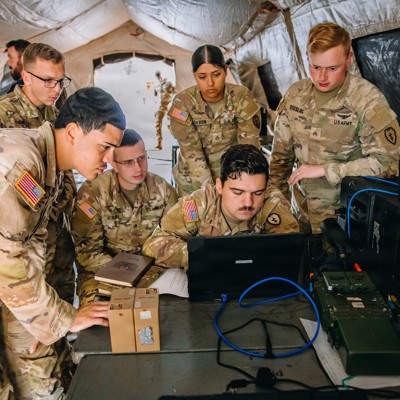
Extended field validation delays the point at which soldiers transition from legacy C2 tools to the new system, which extends the operational window in which units must maintain dual-stack communications infrastructure and training pipelines — this directly increases sustainment costs and reduces training effectiveness during the transition period.
If the 25th ID testing extends past Q3 2026, it will collide with FY27 budget execution cycles, forcing Army Training and Doctrine Command to reprogram reserve component training schedules or accept reduced C2 interoperability during exercises.
If the 25th ID testing delays system maturation, it compresses the window between validation and fielding across active duty and reserve units — a constraint that typically forces either accelerated qualification (increasing defect risk) or postponement of downstream unit training cycles.
The article does not identify the specific C2 system, so the scale of affected units and procurement timelines cannot be assessed. Readers should establish whether this refers to ATAK successor, DCGS-A modernization, or a distinct platform before estimating impact on unit readiness or vendor timelines.
Which C2 system is being tested, what is the planned fielding date, and how many units depend on its completion for their FY27 training schedules?
Fault Lines
Strategic intelligence, synthesized daily — with a public track record. Every call graded against what actually happened.