Space Force Awards First Threat-Warning Radar Payloads; Follow-On Effort Planned for Wider Satellite Fleet
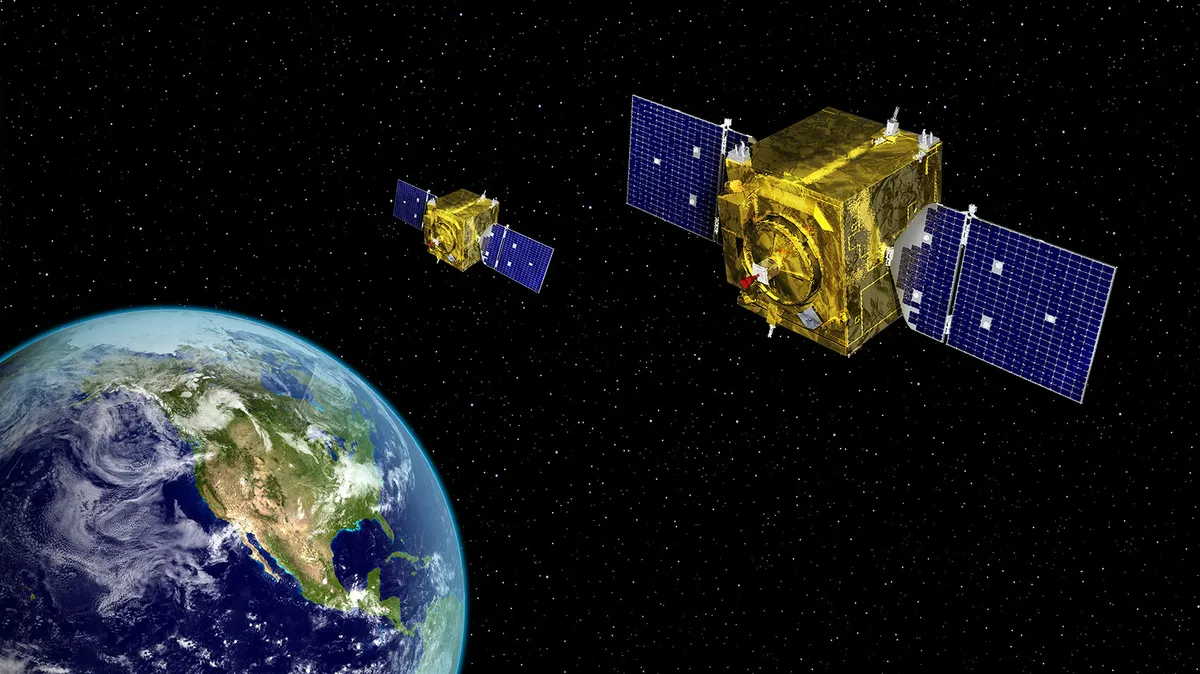
Distributed threat-warning reduces the kill-chain advantage that Chinese or Russian ASAT planners currently enjoy — right now, taking out 2-3 large early-warning satellites degrades US ISR significantly. Spreading the function across 20+ smaller payloads forces adversaries to conduct a much larger ASAT campaign to achieve the same effect, raising the cost and visibility of any preemptive strike.
This directly feeds into Pacific Command's contingency planning for Taiwan scenarios, where the opening move is assumed to be a coordinated ASAT/cyber attack on US space architecture.
This is a capability gap closure, not a strategic surprise.
The Space Force has been operating without dedicated threat-warning satellites for years — existing platforms rely on ground radar or older airborne systems. Distributing threat-warning across the satellite fleet hardens early warning against ASAT attacks and gives theater commanders organic, non-terrestrial ISR that survives ground-based jamming or kinetic strikes.
The follow-on effort signals the building expects this to scale; if the first payload works, expect rapid proliferation across GPS, comms, and ISR birds. The real question is production capacity — if Northrop or Raytheon (whoever won) can't deliver at speed, the Space Force will face the same LRIP bottleneck that plagued SBIRS.
Which primes won the initial contracts, and what is the unit cost per payload? The follow-on effort's timeline and funding profile would tell you whether the Space Force is treating this as urgent (18-month spiral development) or incremental (standard 3-5 year acquisition).
Fault Lines
Strategic intelligence, synthesized daily — with a public track record. Every call graded against what actually happened.