CNO demands transparent maritime contracting; signals delivery accountability focus
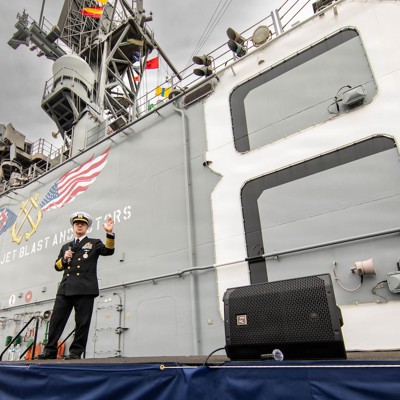
This connects primarily to Market Forces and Power Projection. Market Forces: CNO's statement will likely reshape supplier selection criteria and contract structures, favoring firms with proven supply-chain visibility and digital traceability systems—a competitive advantage for larger primes with integrated planning tools and a headwind for smaller, less-digitized suppliers.
Power Projection: On-time delivery of ships and systems directly affects fleet readiness and deployment timelines; delays cascade across force structure plans. If the Navy can enforce schedule discipline, it recovers schedule margin in shipbuilding and surface combatant programs.
This is a public signal from the Navy's top officer that delivery performance and contracting transparency are now operational priorities—not aspirational talking points.
For shipbuilders and maritime suppliers (Huntington Ingalls, General Dynamics NGEN, Bath Iron Works, and their Tier 2 supply chain), this creates immediate pressure to improve schedule predictability and reduce hidden cost drivers that inflate final prices.
The CNO's direct language ('I need my stuff on time') suggests frustration with current performance and implies that future contract awards or sustainment work may be conditioned on demonstrated delivery discipline.
This matters most to: (1) prime contractors bidding on new work, who must now embed supply-chain transparency into proposals; (2) Tier 2 suppliers, who will face tighter reporting requirements; (3) program managers, who will need to justify delays with data.
The risk: if maritime suppliers cannot meet the transparency standard, the Navy may consolidate work with fewer, larger primes or accelerate in-house production capacity—both outcomes reduce competition and increase costs for smaller suppliers.
The article does not specify which maritime programs or contracts are currently underperforming on delivery, what metrics the CNO will use to measure 'transparent contracting,' or whether new contract language or incentive structures are being drafted to enforce the standard.
Fault Lines
Strategic intelligence, synthesized daily — with a public track record. Every call graded against what actually happened.