Philippine Coast Guard King Air Purchase Extends US Maritime Presence in South China Sea
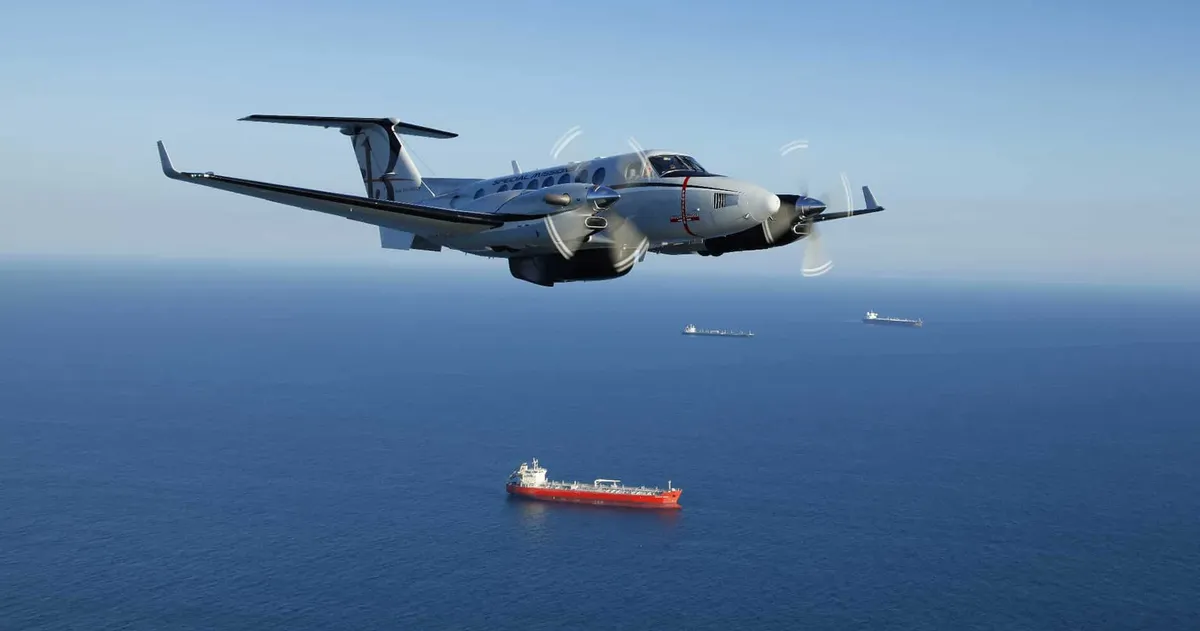
King Air acquisition locks Philippine maritime operations into a US-dependent sustainment model for the next 15-20 years, requiring spare parts and technical support that can only come from US contractors or authorized distributors.
This dependency becomes a leverage point if US export controls tighten or if political friction emerges — any disruption to King Air logistics directly degrades PCG search-and-rescue and coastal patrol capacity.
The procurement also signals to China that the US is willing to incrementally upgrade Philippine capabilities through smaller, affordable platforms rather than large capital ships, a strategy that avoids triggering escalation while maintaining presence.
This sale embeds US aviation logistics into Philippine maritime operations during a period of elevated South China Sea tensions.
King Air platforms provide 8-10 hour endurance and 200+ nautical mile range — sufficient for coastal patrol and extended SAR operations but not for blue-water surveillance.
The acquisition does not materially shift Philippine capability against larger naval actors, but it deepens operational integration with US systems and signals continued US commitment to Philippine security cooperation despite budget constraints on larger platform transfers.
The real constraint is pilot training and sustainment: King Air support requires US technical expertise and spare parts, creating a long-term dependency that ties Philippine maritime operations to US supply chains.
The article does not specify: (1) acquisition cost or funding source (US Foreign Military Sales, grant, or Philippine budget); (2) delivery timeline; (3) whether these replace or augment existing PCG aircraft; (4) maintenance and logistics arrangements (US contractor support vs. in-country capabilit...
Fault Lines
Strategic intelligence, synthesized daily — with a public track record. Every call graded against what actually happened.