Ukrainian Drone Maker Opens UK Factory, Embedding Production in NATO Supply Chain
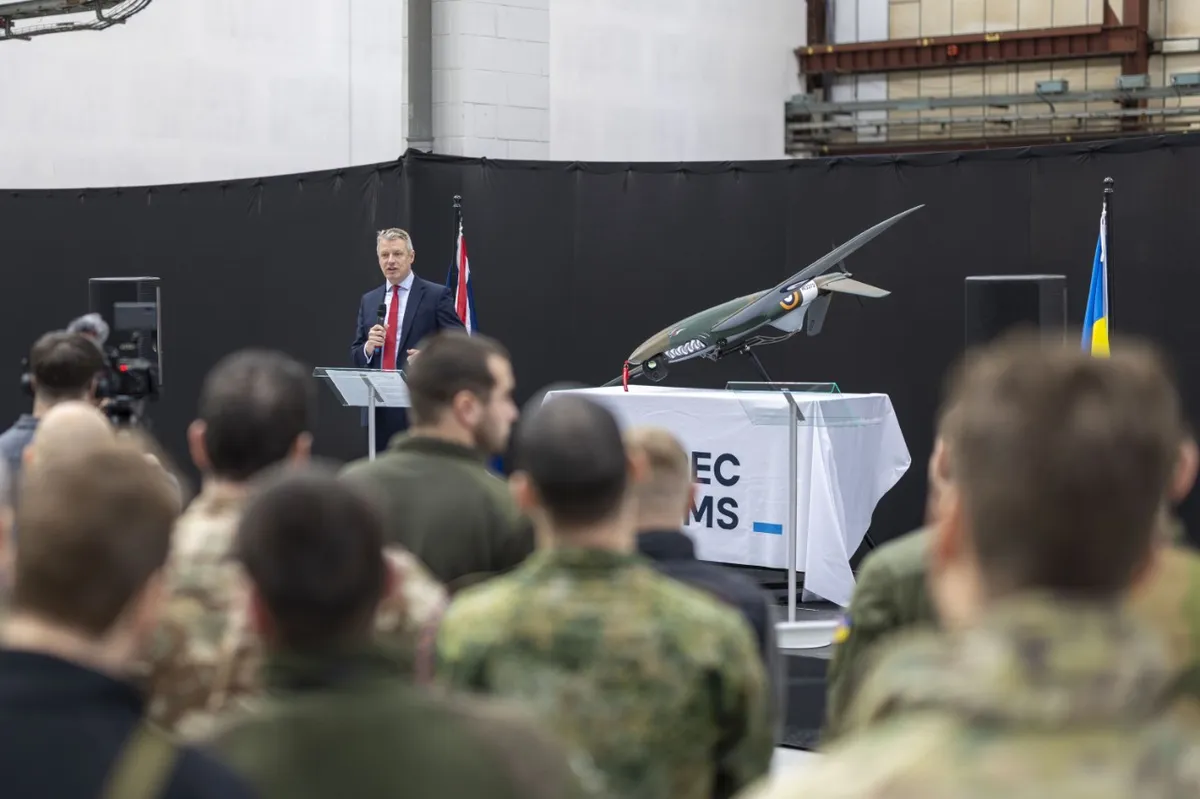
Embedding Ukrainian production in UK territory creates a legal and logistical pathway to supply allied forces without navigating Ukraine's wartime export restrictions or border vulnerabilities.
If this facility reaches operational scale and feeds NATO procurement (e.g., UK MOD drone buys or allied co-production), it reduces dependency on single-source Ukrainian supply and creates a template for other NATO members to replicate — but only if production volumes justify the investment.
The absence of disclosed capacity figures suggests either early-stage deployment or deliberate opacity around allied procurement commitments.
This signals UK commitment to operationalizing Ukrainian defense industrial capacity within allied territory — a shift from pure aid toward co-located production that hedges against supply disruption and creates persistent UK-Ukraine defense ties.
However, the article provides no metrics on scale, cost, or which drone systems will be manufactured, making it impossible to assess whether this is a pilot facility or a material production node. The strategic value depends entirely on unknowns: production volume, which allied procurement programs it feeds, and whether this model extends to other Ukrainian manufacturers or remains isolated.
The article does not state: production capacity or timeline; which specific drone models will be manufactured; whether this is UK-funded, Ukrainian-funded, or co-funded; employment numbers; or which allied air forces or procurement programs are intended customers.
Fault Lines
Strategic intelligence, synthesized daily — with a public track record. Every call graded against what actually happened.