Italy Transfers Decommissioned Garibaldi to Indonesia, Expanding Indo-Pacific Naval Footprint
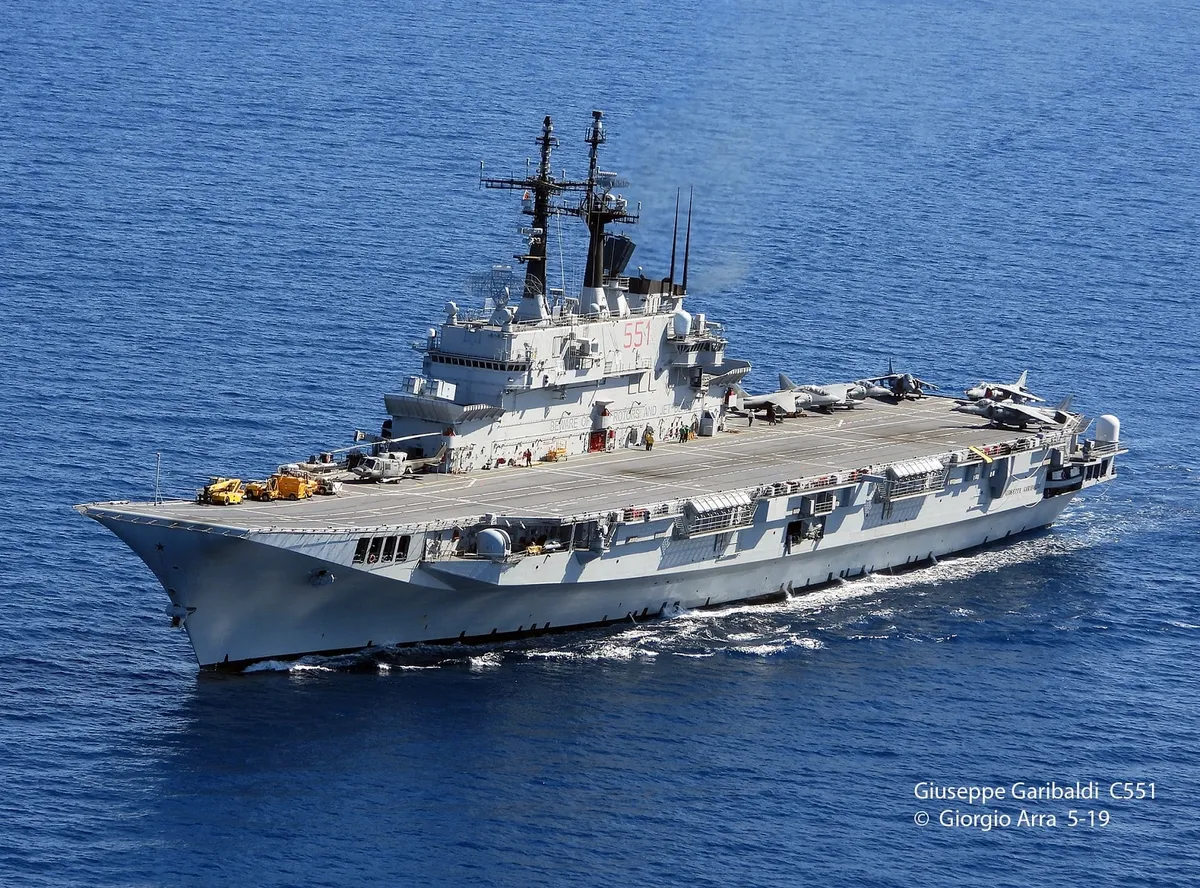
This transfer positions Italian shipbuilders and defense contractors (Fincantieri, Leonardo) as preferred partners for Indonesia's broader naval modernization, creating a foothold for follow-on frigate and submarine contracts that would compete directly with French (Naval Group), German (ThyssenKrupp), and South Korean (Hyundai Heavy Industries) offerings.
By accepting a decommissioned asset, Italy avoids the political friction of a major new-build sale while signaling alignment with Jakarta against Chinese naval expansion — a low-cost way to fragment the regional procurement landscape and prevent any single competitor from dominating Indonesian orders.
The transfer expands Indonesia's power projection capability in Southeast Asia at minimal cost to Rome — a decommissioned platform requires no new Italian shipbuilding investment.
For Indonesia, acquiring a carrier-capable vessel (even if operationally constrained by age and maintenance burden) signals naval modernization ambitions in the Strait of Malacca and South China Sea, where Beijing's naval presence has grown.
Italy gains diplomatic leverage in the Indo-Pacific without capital expenditure, but the real value is signaling: this move advertises Rome as a willing naval technology partner to non-NATO Indo-Pacific states, potentially opening doors for future frigate or submarine sales to Jakarta or other regional navies.
The constraint is maintenance and crew training — Indonesia will need years and significant resources to operationalize a 40+ year-old carrier, limiting immediate power projection gains.
The article does not specify the Garibaldi's current condition, estimated operational timeline post-transfer, financing mechanism, or what 'other defence programs' accompany the deal — details that determine whether this is a symbolic gesture or a genuine capability transfer.
Fault Lines
Strategic intelligence, synthesized daily — with a public track record. Every call graded against what actually happened.