Pakistan Shia Unrest After Khamenei Killing Exposes Sectarian Flashpoint in Nuclear State
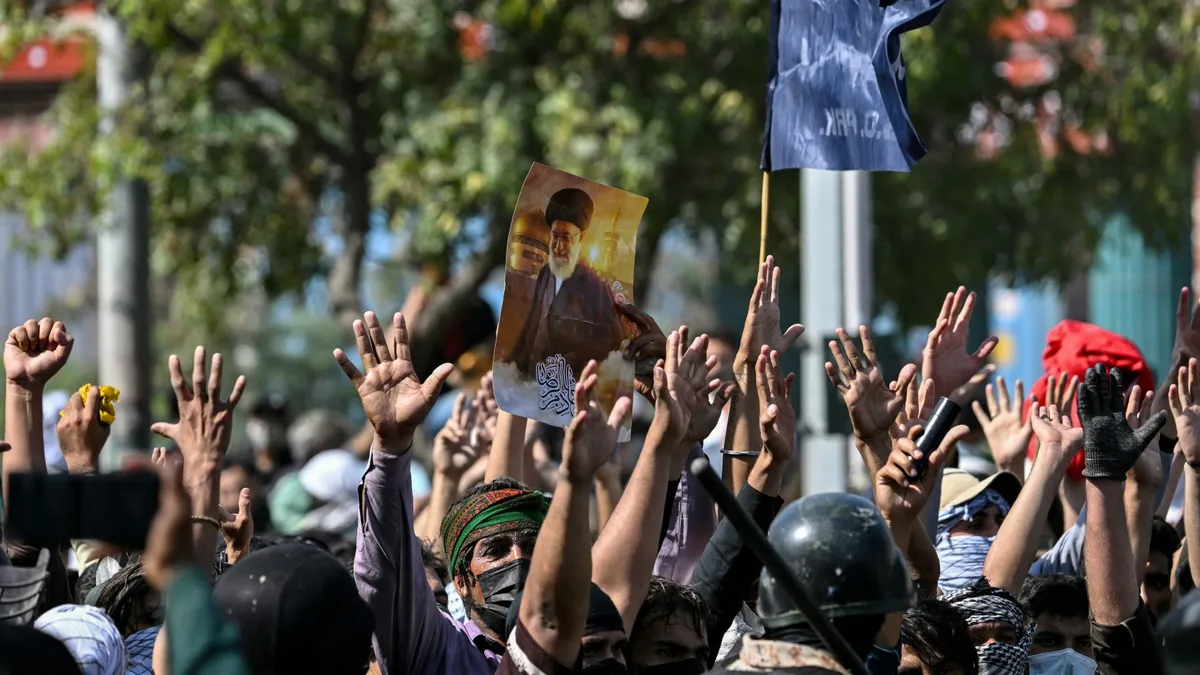
Mass sectarian unrest in Pakistan directly constrains US military logistics and intelligence operations in the region. If anti-US sentiment among Pakistan's Shia hardens into sustained political pressure, the Pakistani government may restrict or withdraw cooperation on drone operations, intelligence sharing, or transit of supplies to Afghanistan—each a material loss to US power projection in Central Asia.
Conversely, if the Pakistani military responds to unrest with heavy-handed sectarian suppression, it accelerates recruitment for Iran-backed militant proxies (Hezbollah Pakistan, Kata'ib Hezbollah affiliates), creating a secondary deterrence problem for US and allied forces in the region.
Pakistan's Shia community (estimated 15-20% of 230M population) has historically been a vector for Iranian influence and a flashpoint for sectarian violence.
Mass casualty protests signal both the depth of Khamenei's symbolic authority within Pakistani Shia networks and the risk of sustained anti-US sentiment in a state with nuclear weapons and active militant groups.
If sectarian tensions escalate into broader unrest, Pakistan's military and security apparatus faces pressure to either suppress demonstrations (risking further radicalization) or permit them (signaling weakness to Sunni-majority constituencies and Islamist actors).
The immediate defense implication: US military presence in Pakistan—including counterterrorism partnerships and intelligence sharing—becomes operationally and diplomatically fragile. Sustained unrest could force Pakistan to distance itself from US operations or demand renegotiation of basing and overflight privileges.
The article does not specify: (1) the exact date of Khamenei's death or the US-Israel strikes; (2) whether the 23 deaths are confirmed or provisional; (3) whether protests have spread beyond Karachi or remained localized; (4) whether Pakistani authorities have deployed military or paramilitary force...
Fault Lines
Strategic intelligence, synthesized daily — with a public track record. Every call graded against what actually happened.