Pentagon Zeroes E-7 Wedgetail Funding in FY27; Congress Battle Looms Over AEW&C Successor
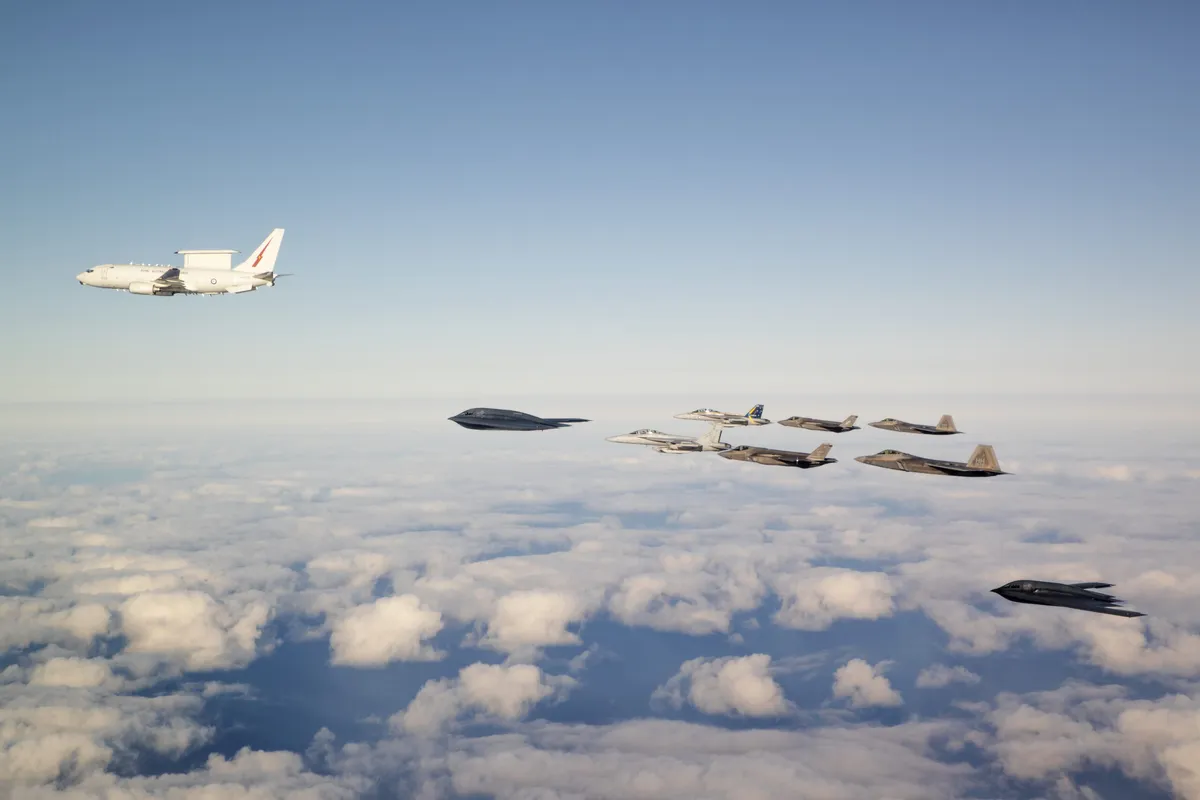
The E-7 deferral compounds the Air Force's broader recapitalization crunch: the FY27 budget doubles the F-15EX buy to 267 aircraft while cutting strategic lift modernization, signaling a shift away from next-generation platforms toward mature, producible inventory.
If the Wedgetail stays unfunded through FY28, the Air Force will operate without a credible AEW&C roadmap precisely when Pacific Command's contested-environment doctrine depends on networked early warning.
This forces either a crash Wedgetail restart (expensive, schedule-busting) or accelerated reliance on space-based ISR and drone-borne sensors — both of which are vulnerable to the co-orbital ASAT threats Russia just operationalized.
This is a budget deferral, not a kill — but it signals internal Pentagon resistance to the Wedgetail that Congress will now have to overcome.
The E-3 fleet is geriatric; average airframe age exceeds 50 years. Without a funded replacement in the FYDP, the Air Force loses the ability to claim a near-term AEW&C modernization path, handing the initiative to Capitol Hill. Boeing loses momentum on a program that was supposed to anchor its defense portfolio; if Congress doesn't restore funding in markup, the prime faces a multi-year gap in new AEW&C production.
The real risk: if the Wedgetail stalls long enough, the Air Force pivots to an interim solution (extended E-3 service life, or a rapid acquisition of a non-Boeing platform like the Saab GlobalEye), and Boeing's leverage evaporates. Watch whether the Hill restores the line item in SASC or HASC markup, and by how much.
Did Air Force leadership explicitly request zero funding, or did OSD impose it to manage the $1.5T budget ceiling? The answer determines whether this reflects genuine program skepticism or just fiscal triage.
Fault Lines
Strategic intelligence, synthesized daily — with a public track record. Every call graded against what actually happened.