Space Force Drops Orbital Interceptors from Golden Dome Design; Cost Overruns Force Architecture Retreat
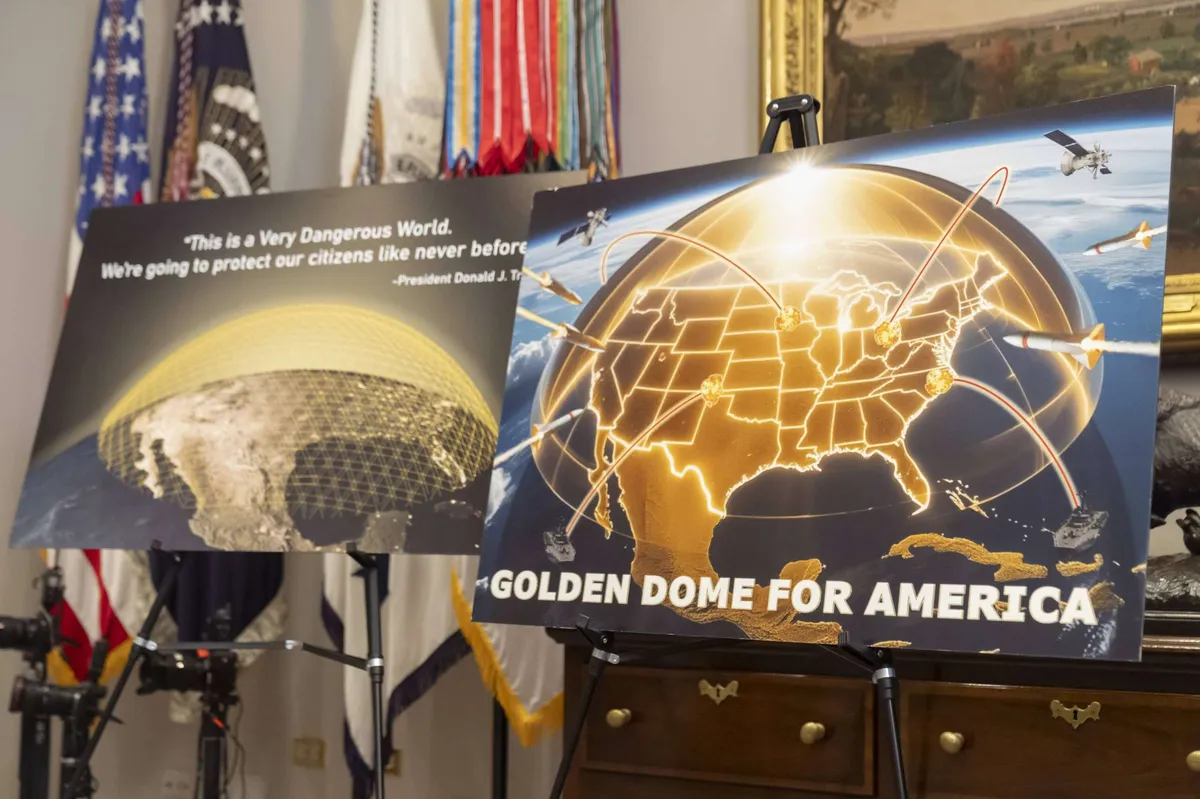
Golden Dome's retreat from space-based kill vehicles cascades into the broader hypersonic defense gap that DoD is already struggling to fill.
If the Space Force cannot afford orbital interceptors as a component of a $10B+ program, the service loses its primary argument for accelerating satellite constellation buildout — which means less urgency on Proliferated Low-Earth Orbit (PLEO) funding and delayed operational coverage over contested regions.
This is a quiet admission that Golden Dome's original vision is unaffordable.
Space-based kill vehicles were supposed to compress engagement timelines against hypersonic threats — removing them forces the program back toward terrestrial systems (likely Raytheon's THAAD variants and Lockheed's terminal-phase interceptors), which means longer engagement windows and degraded performance against the exact threat the program was designed to counter.
If orbital interceptors are truly off the table, Golden Dome becomes an incremental upgrade to existing architecture rather than the leap-ahead capability the building sold Congress. That shifts the entire FYDP calculus: expect either a lower-cost, lower-capability program or a reprogram request within 18 months when the gap becomes undeniable.
Does the cost estimate for the final architecture (without space-based interceptors) already exist, and has it been briefed to SAC or OSD? If not, this is a red flag that Guetlein's team is still in denial about what they can actually deliver.
Fault Lines
Strategic intelligence, synthesized daily — with a public track record. Every call graded against what actually happened.