B-21 Raider Demonstrates Weapons Release Capability at Edwards AFB; 2027 Ellsworth Delivery on Track
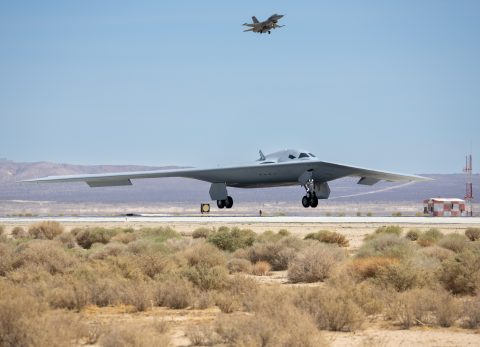
The B-21 is being developed against a force structure that still relies on Boeing B-1Bs at Dyess and B-2s at Whiteman, both of which the USAF intends to retire as Raider deliveries accumulate.
If the 2027 Ellsworth delivery holds, the B-1B retirement timeline at Dyess accelerates — Boeing's sustainment contracts for the Lancer fleet are already under pressure, and a confirmed IOC date gives the USAF the leverage to begin formal divestiture planning.
The Dyess Mission Planning Facility groundbreaking on November 5 suggests the USAF is treating the B-21 transition there as a near-term operational event, not a long-range planning assumption.
Ellsworth AFB's 2027 delivery timeline now has a weapons-release milestone behind it, which removes one of the more credible schedule-slip arguments available to program critics on the Hill.
The $4.5 billion production acceleration agreement between Northrop and the USAF, combined with the October groundbreaking on a permanent final assembly line at Plant 42 and a second manufacturing facility in Layton, Utah, means the industrial base is being built around a delivery cadence, not ahead of one.
The $78 million Mission Planning Facility that broke ground at Dyess AFB on November 5 confirms the USAF is simultaneously building the command infrastructure for combat operations, not just the aircraft.
What munition type was used in the weapons release test — a gravity bomb, a standoff weapon, or a nuclear-certified store — and does the test configuration reflect the B-21's initial operational capability loadout or a surrogate?
Fault Lines
Strategic intelligence, synthesized daily — with a public track record. Every call graded against what actually happened.