MQ-9 Losses in Iran Campaign Reach ~10 Aircraft; Attrition Rate Signals Air Defense Adaptation
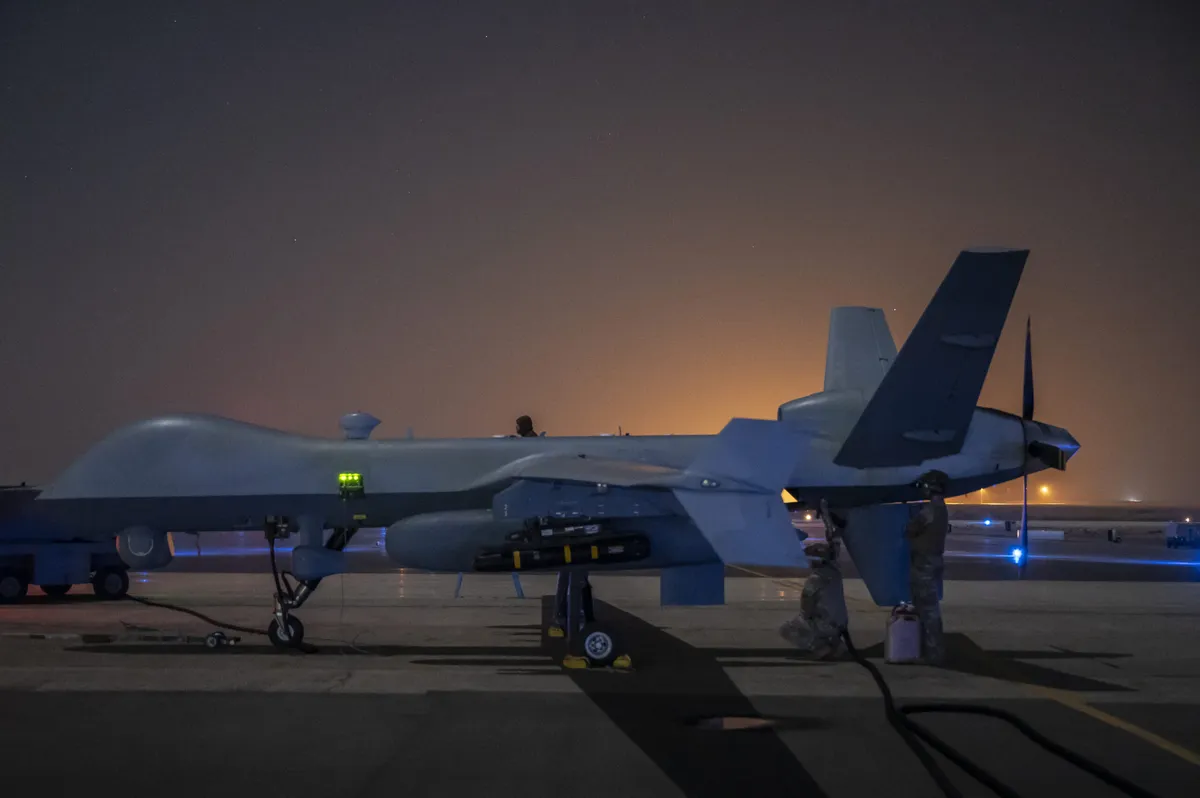
Confirmed MQ-9 attrition directly constrains the targeting cycle that has enabled the B-2 strikes on hardened facilities (Parchin complex) and the precision missile targeting of Iranian ballistic launchers documented in prior signals.
If Iran's remaining air defenses can impose a 5-10% loss rate per sortie, the US may need to shift to satellite-based ISR or accept longer targeting cycles, which would slow the rate of Iranian launcher destruction and create windows for Iranian retaliation (consistent with the 28 documented strike waves already underway). This does not stop the campaign but changes its tempo and cost structure.
If confirmed, ~10 MQ-9 losses represent the first quantified attrition data in the Iran campaign and suggest Iranian air defenses are degrading but not eliminating the ISR/strike capability that has been central to the US-Israeli targeting cycle documented in prior signals.
The loss rate matters more than the absolute number: 10 losses over 72 hours of intensive operations (March 10-13) implies a sustainable attrition model for Iran's remaining air defense inventory, whereas 10 losses across weeks would suggest US air superiority is intact. The article does not provide either denominator, making strategic assessment premature.
Reaper losses do not immediately constrain the campaign — the US operates hundreds globally — but sustained attrition could force shifts in ISR sourcing (toward satellites, manned aircraft, or allied platforms) and would validate Iranian claims of air defense effectiveness.
The article does not specify: (1) the timeframe over which 10 losses occurred; (2) whether losses are confirmed kills or claimed by Iran; (3) the total number of MQ-9 sorties flown, enabling a loss rate calculation; (4) which Iranian air defense systems (Tor, S-300, IRGC-operated short-range systems...
Fault Lines
Strategic intelligence, synthesized daily — with a public track record. Every call graded against what actually happened.