Air Force Seeks Supplemental Funding to Replace Aircraft Lost in Epic Fury Strikes
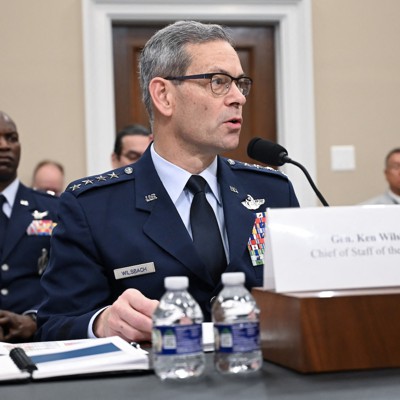
Aircraft replacement timelines now compete directly with sustained Iran operations for industrial capacity. If Lockheed, Boeing, or General Dynamics must accelerate F-16, F-15E, or B-1 production to backfill losses, they pull labor and supply chain from other LRIP programs — notably NGAD and next-gen fighter development.
Conversely, if the supplemental isn't approved, the Air Force enters a capacity constraint that forces operational tempo decisions, which feeds back into Trump's blockade duration calculus (already set for 'months'). The conflict's economics now have a visible fiscal boundary.
This is the first hard signal that Epic Fury inflicted attrition losses large enough to require mid-year budget relief — not operational damage, but inventory depletion.
The Air Force burned through airframes faster than the pre-conflict budget cycle anticipated. If the supplemental is substantial, it signals two problems: first, that combat losses exceeded pre-war modeling; second, that the building didn't account for a sustained campaign when it submitted the FY27 request in February.
Watch whether Congress approves the supplemental quickly or uses it as leverage to constrain the conflict's duration. Delays in replacement funding will ripple through LRIP schedules for affected platforms.
How many aircraft were lost, and which platforms? The article doesn't specify — and that number determines whether this is a rounding error or a force-structure problem. A dozen F-16s is routine attrition; 40+ is a readiness crisis.
Fault Lines
Strategic intelligence, synthesized daily — with a public track record. Every call graded against what actually happened.