Rheinmetall Secures €5.7B Romania Contract for Lynx, Skyranger, Warships
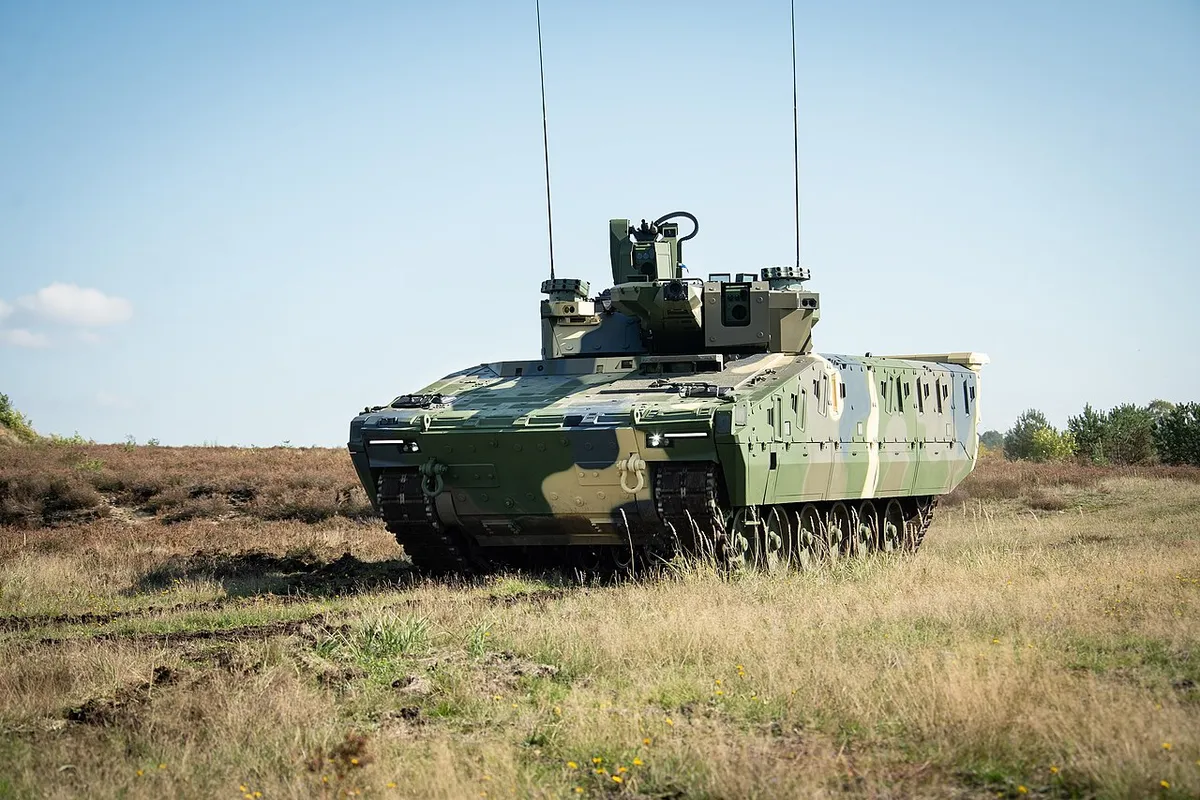
This deal compresses the European industrial base consolidation that was already underway. If Rheinmetall delivers 5.7B EUR of German-designed systems to Romania over five years, it means Krauss-Maffei Wegmann (KMW) and Rheinmetall together now own the Central European armoured vehicle market — Poland, Czechia, Slovakia, and the Baltics are all Leopard 2/PzH 2000 users or Lynx customers.
That eliminates the last realistic alternative to German supply. The second-order effect: European defence ministers will begin treating German production capacity as a strategic constraint equivalent to semiconductor fabs. By 2028, access to Rheinmetall's lines becomes a leverage point in EU-NATO negotiations over burden-sharing and industrial policy.
Romania is locking in German-led capability before the broader NATO procurement window closes in 2027–2028, when production constraints will force hard choices about who gets priority access to European defence industrial capacity.
Rheinmetall's Lynx and Skyranger lines are already constrained by demand from Poland, Germany, and the Baltics — adding Romania's order (likely 200+ Lynx vehicles and 24+ Skyranger units based on comparable NATO buys) extends delivery timelines by 18–24 months for other customers.
The SAFE financing mechanism signals that Brussels is now willing to deploy EU capital directly into NATO interoperability, which bypasses traditional national defence budgets and locks allied spending into German industrial capacity for the next five years. Watch whether Poland or the Baltics challenge the delivery timeline in Q3 2026 budget negotiations.
What is the actual vehicle count and unit breakdown in the Romania contract? The article cites total value but not the specific quantities of Lynx, Skyranger, or warship type — essential for modeling production sequencing against other NATO customer commitments.
Fault Lines
Strategic intelligence, synthesized daily — with a public track record. Every call graded against what actually happened.