Air Force Dual-Awards CCA Production to General Atomics and Anduril; Hedges Against Single-Source Risk
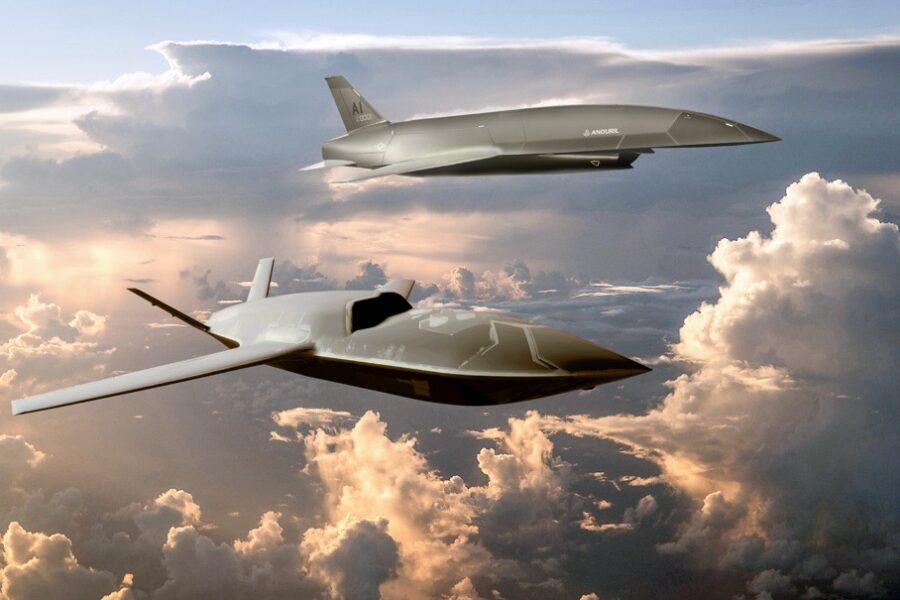
Dual-award production is expensive: tooling, quality assurance, and logistics overhead roughly double. The Air Force is absorbing this cost because CCA is intended to surge in contested airspace where attrition will be high and supply-chain resilience matters more than per-unit economics. If one contractor falters — capacity constraint, quality failure, or acquisition delay — the other can sustain the program.
This also signals confidence in both designs: neither is seen as a fallback option. Anduril's inclusion is notable because the firm has no legacy DoD production experience; the award validates its manufacturing model and opens a new revenue stream for a company that has raised $1.5B+ in private capital.
This dual-award locks in competition at the production stage rather than the design phase — a rare move that signals the Air Force prioritizes hedge against supply-chain concentration and schedule risk over unit-cost efficiency.
General Atomics and Anduril will now compete on production price and delivery, which means neither firm can rest on design victory; both must scale manufacturing in parallel. Watch the FY27 NDAA markup for total CCA production funding and whether Congress splits the award equally or weights it toward the incumbent (General Atomics' MQ-9 production base).
What is the split — equal funding, or does one contractor get the larger initial tranche? And does the Air Force specify a glide-slope to single-source production, or is this permanent dualism?
Fault Lines
Strategic intelligence, synthesized daily — with a public track record. Every call graded against what actually happened.