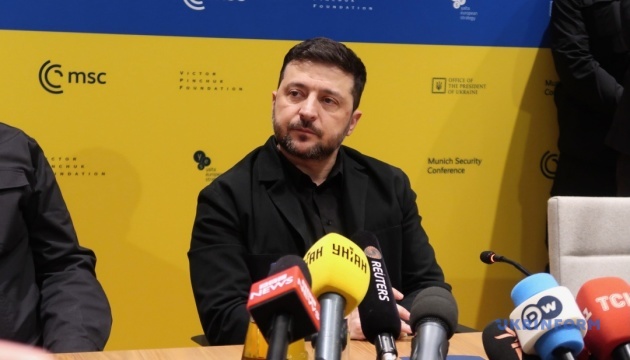
Ukraine seeks 20+ year US security guarantee; Washington offers 15-year framework
This is primarily a Power Projection story with secondary Market Forces implications. On power projection: the guarantee duration directly determines how long the U.S. underwrites Ukraine's military capability and deterrence posture against Russian reconstitution. On market forces: defense primes and allied suppliers need certainty about the duration of demand for Ukraine modernization and sustainment.
A 15-year horizon may be seen as insufficient for major platform investments (e.g., fighter jets, frigates, air defense systems with 30-year service lives), while 20+ years aligns better with industrial planning cycles.
The gap between 15 and 20+ years reflects fundamentally different assumptions about post-conflict stability and deterrence credibility.
A 15-year guarantee expires around 2041—within a single U.S. presidential generation and potentially before NATO integration is complete. Ukraine's request for 20+ years suggests it seeks guarantees extending into the 2040s, covering a longer reconstitution and modernization cycle for its armed forces.
This directly affects defense industrial planning: contractors bidding on Ukraine modernization programs (e.g., air defense, armor, naval) need clarity on whether the U.S. commitment extends long enough to justify multi-decade platform lifecycles. If the U.S. holds at 15 years, Ukraine may hedge by diversifying suppliers (Poland, UK, France, Japan) or accelerating domestic production.
If extended to 20+, it signals sustained U.S. commitment and likely increases predictability for defense primes in the Eastern European supply chain. The outcome also sets a precedent for future non-NATO security arrangements (Taiwan, South Korea, Philippines) and affects how allies assess U.S. credibility on long-term commitments.
The article does not specify what 'security guarantees' entail—military aid, NATO-equivalent Article 5 commitments, tripwire forces, or something else—nor does it indicate the negotiating parties, timeline for resolution, or conditions under which either side would accept a compromise (e.g., 17-18 y...
Fault Lines
Strategic intelligence, synthesized daily — with a public track record. Every call graded against what actually happened.