Chile Commissions First of Four 8,000-Ton LPDs; Naval Modernization Enters Delivery Phase
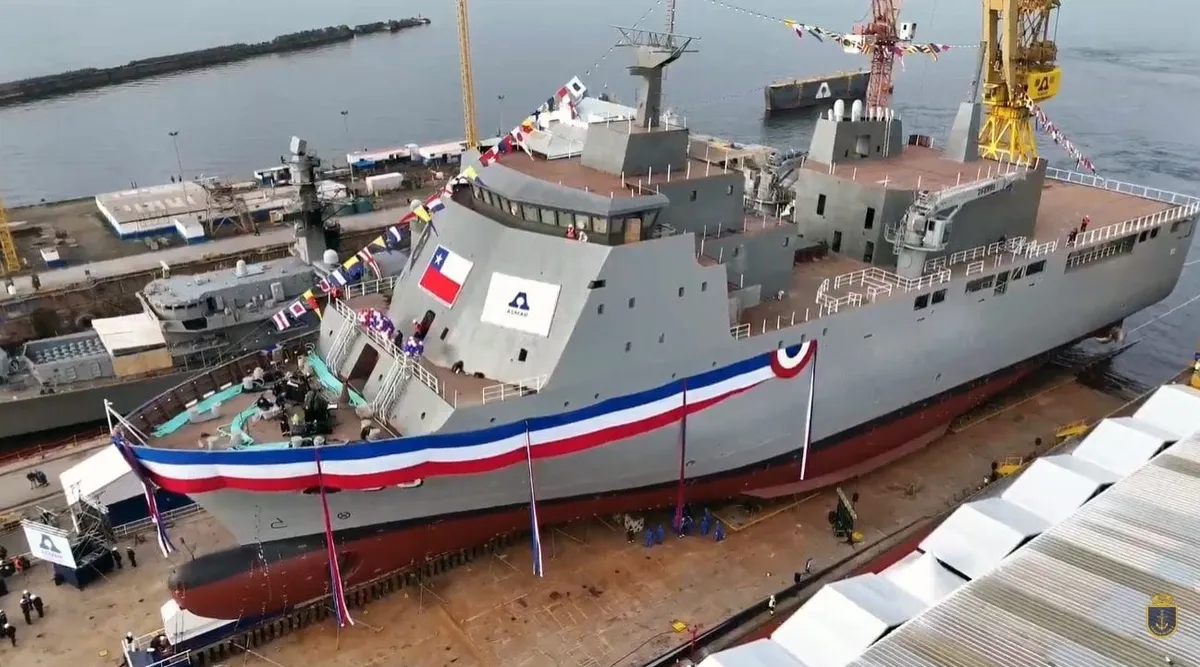
The launch is incremental for Chile's own defense posture but sits within a broader regional pattern: Argentina is modernizing its naval fleet, Peru is acquiring new corvettes, and Brazil maintains the region's largest carrier. Chile's LPD investment signals it is not ceding amphibious projection capability to larger neighbors.
If the remaining three hulls deliver on schedule, Chile will have the region's most modern amphibious lift — a capability advantage that matters for Antarctic claims enforcement and disaster response, both of which carry strategic weight in South American geopolitics.
This confirms Chile's commitment to sustained amphibious modernization at a time when regional maritime competition in the South Pacific is accelerating.
The Chilean Navy is locking in a 3-4 year delivery cadence for the remaining three hulls, which ties up domestic shipyard capacity and signals confidence in the industrial base's ability to sustain production.
Watch whether the remaining three hulls maintain the 46-week build rate or slip — delays would expose whether Chilean yards can execute complex naval construction or whether future procurement will shift to foreign builders.
What is the actual contract value for the four-ship Escotillón IV program, and who is the prime contractor? The article does not state either. Does Chile plan to use these LPDs primarily for Antarctic logistics and regional presence, or are they intended for higher-end amphibious operations?
Fault Lines
Strategic intelligence, synthesized daily — with a public track record. Every call graded against what actually happened.