Navantia Launches Sixth Saudi Corvette; Second Contract Delivery Phase Begins
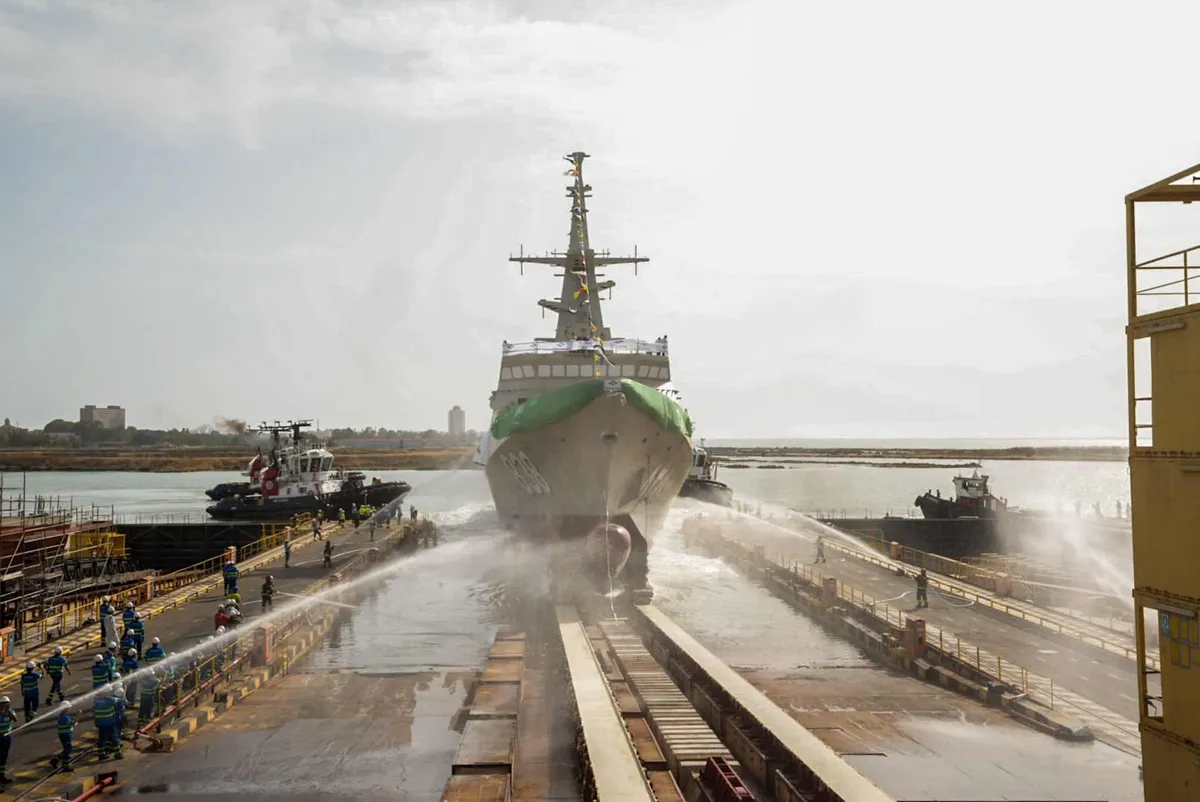
If the second contract mirrors the first (six vessels), Navantia will sustain ~1.5 corvettes per year through 2029-2030. That production rate is contingent on Spanish labor availability and steel sourcing — both tightening across European shipyards as AUKUS and NATO procurement accelerate.
Watch whether Navantia competes for the UK-led long-range strike missile program (already in delivery phase per recent Fault Lines reporting) while maintaining corvette throughput; simultaneous programs at the same yard create scheduling conflicts that typically surface in FY27-28 contract negotiations.
This marks the transition from initial contract completion to sustained production under a follow-on agreement — a signal that the Saudi-Spanish naval partnership is moving beyond proof-of-concept into a multi-tranche commitment.
For Navantia, sustained corvette production locks in San Fernando yard capacity through the late 2020s and establishes a recurring revenue stream that competes with UK and German shipbuilders for Gulf state modernization contracts.
For the Saudi Navy, the second contract expands fleet capacity in the Red Sea and Arabian Gulf at a time when Iran's IRGC is establishing covert Iraqi cells to attack Gulf states — making naval escort and patrol capability a near-term operational requirement, not a long-term aspiration.
What is the total unit count under the second contract, and what is the delivery timeline? The article does not specify whether this is a 2-ship, 4-ship, or larger tranche, nor does it state when HMS Almadinah or subsequent vessels are expected to enter service.
Fault Lines
Strategic intelligence, synthesized daily — with a public track record. Every call graded against what actually happened.