UK Typhoons Down Iranian Drones Over Middle East; Air Defense Now Active Allied Response
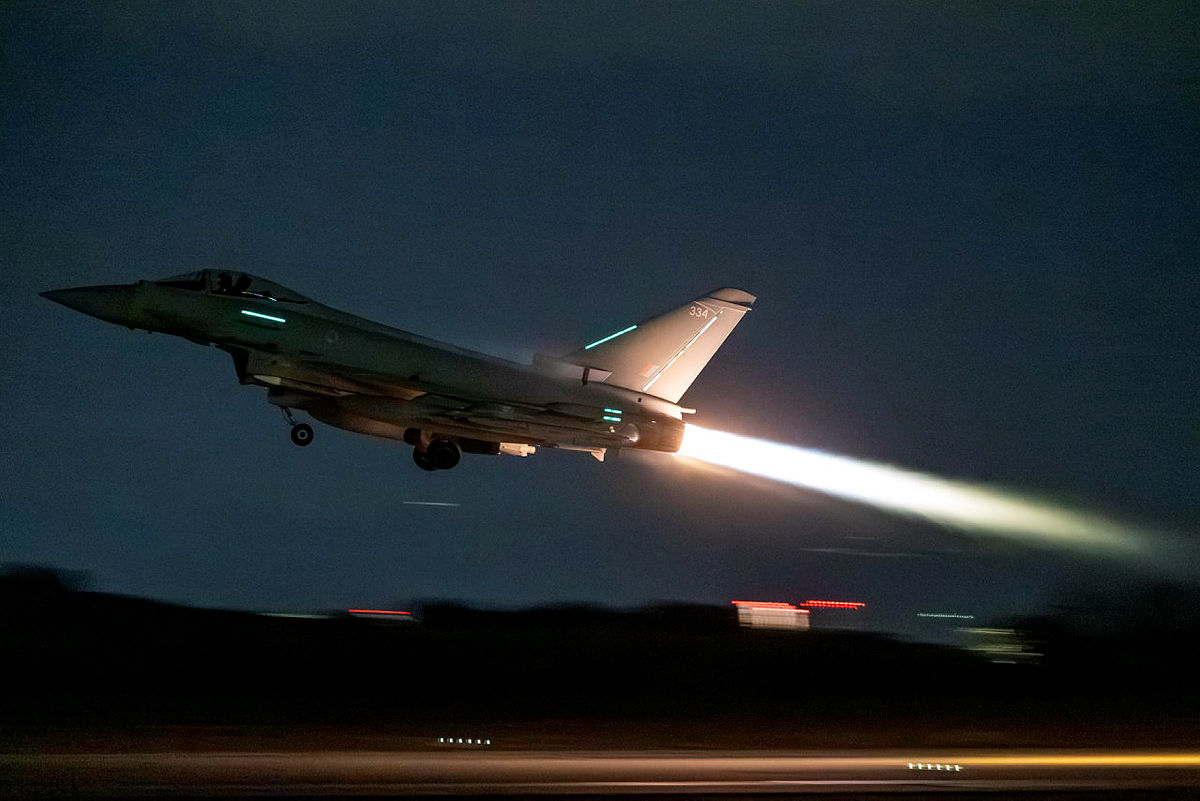
UK air defense activation expands the allied air umbrella beyond US-Israeli assets and introduces a third-party interception variable into Iranian strike planning. If UK Typhoons are now committed to regional air defense, this reduces available UK airframes for offensive tasking and signals that allied air defense capacity is the limiting factor in containing Iranian drone/missile waves—not Iranian launch capacity.
This shifts the conflict into an attrition race where drone interception rates determine whether Iranian strikes reach allied targets (oil infrastructure, military bases, shipping) or degrade en route.
This represents the first confirmed allied air defense engagement against Iranian drone strikes in the current escalation cycle.
It signals that UK air assets are now actively defending against Iranian unmanned systems rather than conducting offensive operations—a shift from the US-Israeli strike posture documented in prior signals.
However, the lack of operational detail (location, number of drones launched, interception rate) prevents assessment of whether UK air defense is containing Iranian drone waves or merely intercepting isolated systems. If Iran is sustaining the 27+ waves of strikes already underway, UK engagement rates will determine whether allied air defense can degrade Iranian strike effectiveness or merely reduce it incrementally.
The article does not specify: (1) geographic location of the intercept (Gulf, Iraq, Saudi Arabia, or elsewhere); (2) total number of drones in the Iranian wave that prompted the engagement; (3) interception rate or how many drones penetrated UK air defense; (4) whether UK assets were defending fixed...
Fault Lines
Strategic intelligence, synthesized daily — with a public track record. Every call graded against what actually happened.