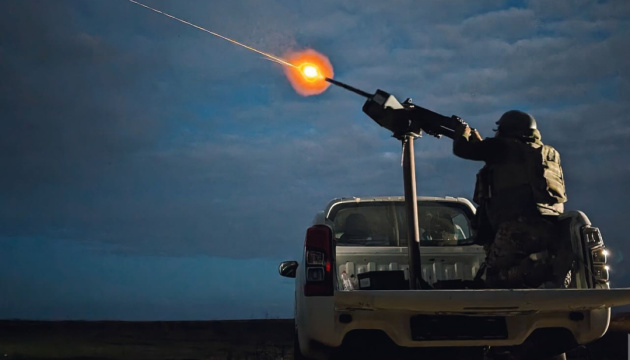
Ukraine Air Defense Intercepts 138 of 147 Russian Drones in Overnight Attack
This single engagement doesn't signal a structural shift — it's one night in an ongoing attrition contest. However, if Ukraine sustains 90%+ intercept rates while Russia sustains 100+ drone sorties per 72-hour cycle, the binding constraint becomes not defense effectiveness but interceptor production and Western supply.
Patriot missiles cost $4M per shot; Raytheon and Lockheed Martin have signaled production limits at 300-400 units annually across all NATO customers. If Ukraine consumes 500+ interceptors per month, the bottleneck moves from air defense systems to ammunition supply — forcing EUCOM and DSCA to prioritize Ukraine over other theaters or trigger emergency production contracts.
The 94% intercept rate reflects sustained Ukrainian air defense capability despite 72 hours of Russian escalation (50-site Kyiv strike May 24, Oreshnik ICBM deployment, and Black Sea Fleet targeting May 27).
If this rate holds, Russia faces a calculus shift: attrition costs per drone exceed $100K-$300K per unit depending on type, while Ukraine's layered defense (Patriot, IRIS-T, Tor, Gepard) consumes $30K-$80K per intercept. The math favors Ukraine only if production and supply chains sustain.
Watch whether Russia shifts to saturation attacks (200+ drones per night) to exhaust interceptor stocks, or pivots to manned aircraft with lower attrition.
What is the actual composition of the 138 intercepted drones — how many were Shahed-136s vs. Lancet loitering munitions vs. newer Gerbil or Geran variants? Intercept rates vary by platform; a 94% rate against Shaheds looks different than 94% against hypersonics.
Fault Lines
Strategic intelligence, synthesized daily — with a public track record. Every call graded against what actually happened.