NATO deploys 70-drone Baltic fleet as frigate alternative; cost and sustainment implications unclear
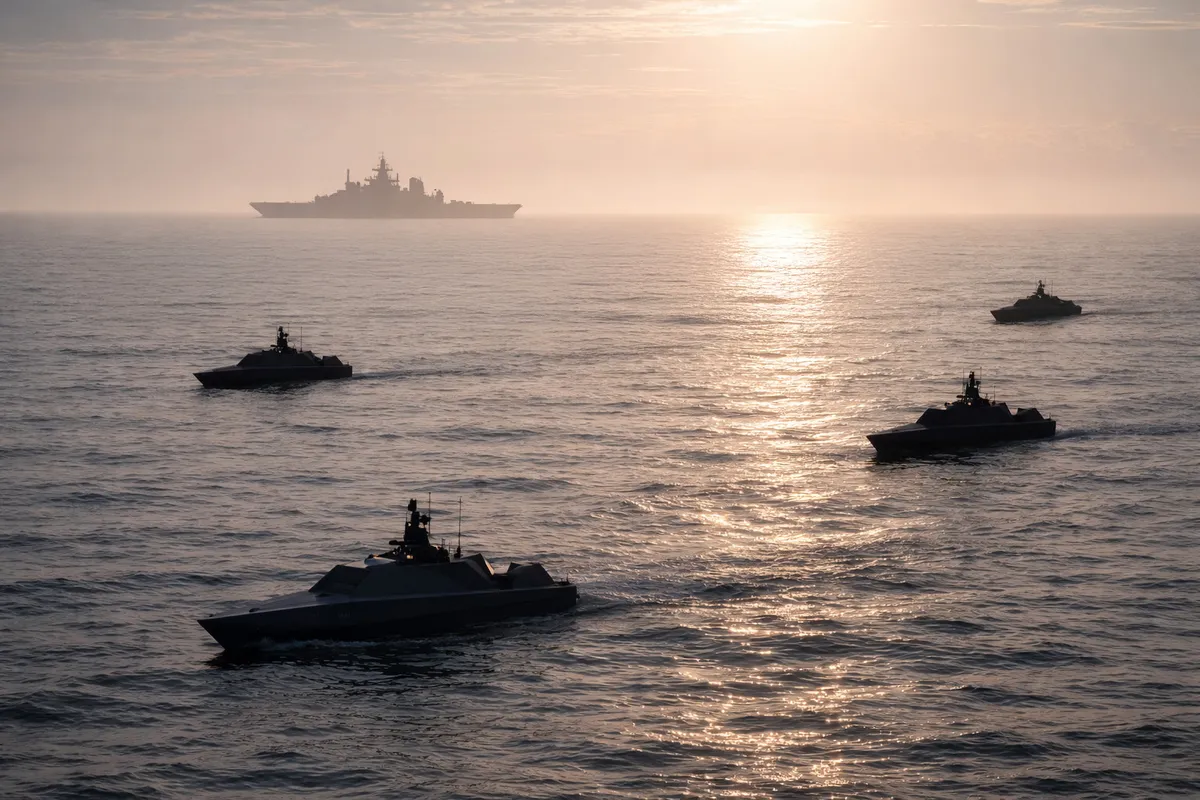
Primary mechanism: Power Projection. NATO is testing whether unmanned persistent surveillance and deterrence presence can substitute for manned naval assets in a high-friction zone, reducing operational cost and crew rotation burden. Secondary mechanism: Market Forces.
If this deployment proves sustainable, it could reshape procurement preferences toward drone fleets over frigate production—a material shift in naval industrial demand. Limited cross-pillar relevance: Geopolitical Friction is the context (Russia deterrence), not the consequence of this signal.
This deployment tests whether persistent drone coverage can replace or reduce demand for expensive surface combatant rotations in constrained operating areas.
If operationally viable, it signals a shift in force-structure economics: 70 drones cost substantially less to acquire and operate than continuous frigate presence, potentially freeing naval assets for other theaters.
However, the article does not specify drone endurance, maintenance burden, or whether this is a temporary deployment or permanent posture change—critical unknowns for assessing whether this reduces or merely defers frigate demand.
Relevant to naval prime contractors (Huntington Ingalls, General Dynamics Naval Systems) and drone manufacturers (General Atomics, AeroVironment, Elbit), but only if this scales beyond a single Baltic operation.
What drone platforms comprise the 70-unit fleet? What is the total lifecycle cost versus continuous frigate patrol? Is this a permanent force structure change or a limited-duration trial? How does persistent drone coverage address subsurface threats that surface ships deter?
Fault Lines
Strategic intelligence, synthesized daily — with a public track record. Every call graded against what actually happened.