UK Procures Additional Threod CATA Launchers for ASGARD One-Way Effector Program
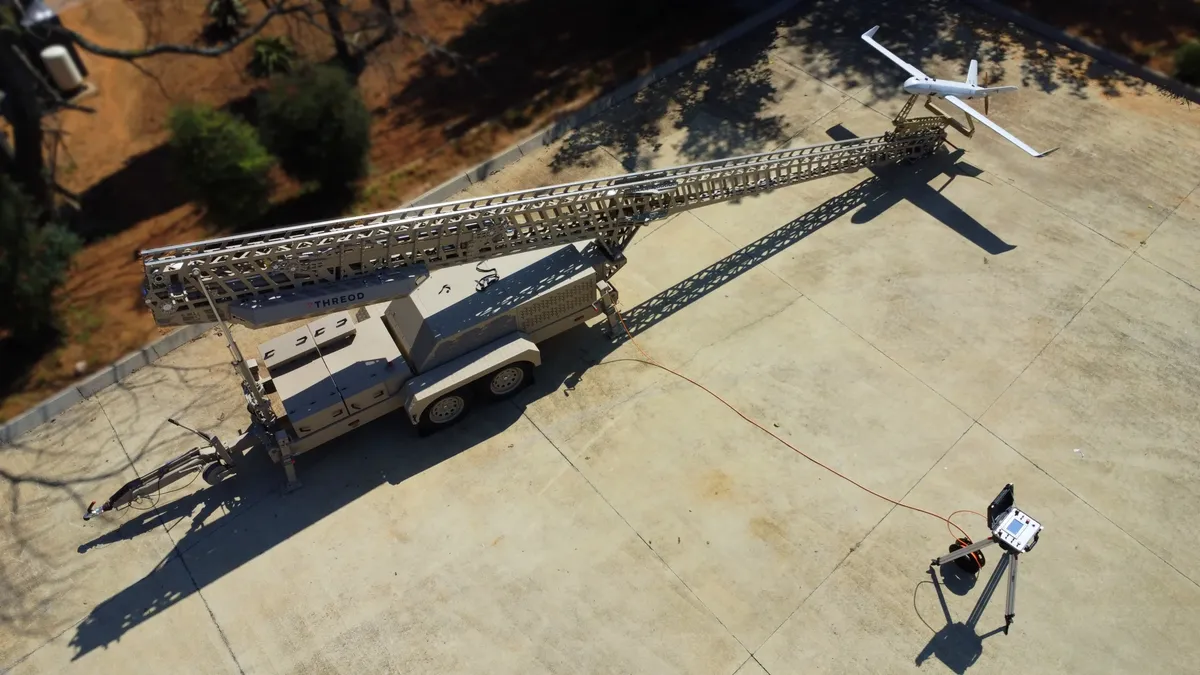
If the UK is expanding CATA procurement beyond an initial pilot, it establishes Threod as the de facto British Army loitering munition standard, which locks in training, logistics, and spare-parts supply chains that other allied nations must either mirror or work around during joint operations.
This procurement choice also signals whether the UK is pursuing independent OWE capability or integrating into an allied framework — a distinction that affects NATO standardization efforts and allied interoperability planning for near-peer conflicts.
This signals UK commitment to fielding loitering munition capability at scale, but the signal is severely constrained by missing data.
The decision to standardize on Threod's platform rather than develop indigenous or adopt a NATO-standard system has implications for UK-allied interoperability and industrial base decisions — yet the article provides no contract value, unit count, or delivery schedule to assess whether this is a pilot expansion or a major capability commitment.
Without knowing the procurement scale, we cannot determine whether this forces allied nations toward Threod adoption or remains a UK-specific choice. The use of 'additional' suggests prior procurement, but no baseline is cited.
What is the contract value and quantity? What was the prior ASGARD procurement? What is the planned operational timeline? Are there allied nations adopting CATA, or is this UK-only? Does this compete with or complement NATO's emerging loitering munition standards work?
Fault Lines
Strategic intelligence, synthesized daily — with a public track record. Every call graded against what actually happened.